

Best Antique Identification App: What to Look For
What an antique identification app can do well, where it still needs human judgment, and how to get better results from your photos.
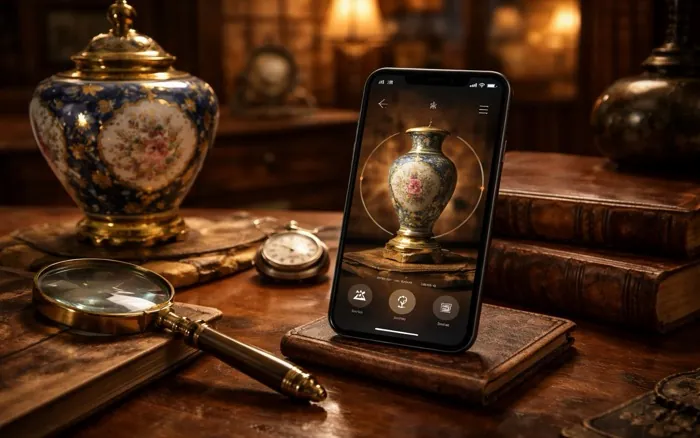
An antique identification app is most useful when you need a fast first pass, not a dramatic promise. If you are standing in a thrift store, estate sale, flea market, or antique mall, the app helps you move from “what is this?” to a more practical question: what category is this, what era clues can I see, and is this worth researching further?
That is the right frame for using it well. A good app can save time, help you notice marks or materials you might have missed, and point you toward stronger next steps. It should not be treated as a legal appraisal, a guarantee of authenticity, or a substitute for careful inspection on a potentially high-value item.
What a good antique identification app should actually help you do
The best apps are not just image search tools with marketing polish. They help you narrow the field quickly enough to make a better buying, selling, or research decision.
At a minimum, a useful antique identification app should help with:
- category recognition, such as silver plate, porcelain, pressed glass, furniture, or costume jewelry
- likely era clues based on form, decoration, and construction
- mark-reading support when you upload clear close-ups
- practical value direction rather than an inflated fantasy number
- a structured way to save photos and notes for later research
That combination matters because most real-world decisions happen before formal appraisal. You are usually deciding whether to buy, pass, negotiate, list, or keep researching.
Where an app still needs human judgment
Photo-based identification has limits. A strong app can narrow the likely type, material, or maker range, but it still depends on the evidence you give it.
It may struggle when:
- marks are worn, partial, or hidden
- the object has repairs, replacement parts, or mixed materials
- a reproduction copies older styles or copied marks
- the value depends heavily on condition, provenance, or subtle construction details
That is why the best workflow is “app first, verification second.” Use the app to reduce the search space, then confirm with sold comparables, maker-mark references, or a professional opinion if the item looks significant.
If value is your next question, pair the app with a grounded framework like Antique Price Guide: How to Estimate What It’s Worth rather than trusting one output number on its own.
How to get better results from your photos
The quality of the result usually tracks the quality of the photos. A quick blurry shot from across the room gives the app very little to work with.
For better matches, upload:
- one full shot of the whole object
- one shot of the base, underside, or back
- close-ups of marks, labels, stamps, or signatures
- detail shots of wear, chips, repairs, or replaced parts
- one photo that shows scale if the object is small
Simple lighting helps too. Window light is usually better than a harsh flash, especially on glass, silver, or glossy ceramics. If you are trying to read marks, take one photo straight on and another from a slight angle so worn impressions become more visible.
This is especially important for silver and metalware. If you are working with tiny stamped marks, Sterling Silver Hallmarks: How to Read Them Correctly gives a better model for what the app needs to see clearly.
What to do after the first result
A smart identification workflow does not stop at the first match. Once the app gives you a likely direction, ask three follow-up questions:
- Does the material fit the result?
- Do the marks or labels support the result?
- Does the construction make sense for that period and maker?
For example, if the app suggests sterling silver but the piece is marked EPNS, that is a sign to stop and reassess. If it suggests antique porcelain but the base looks machine-made and the mark seems freshly printed, you need another layer of verification.
That is where the app becomes valuable. It speeds up the first pass and tells you what to inspect next instead of leaving you stuck at guesswork.
When an app is most useful
An antique identification app tends to be most useful in these situations:
- thrift store and flea market buying
- estate sale triage when there are many objects to sort quickly
- resale sourcing when you need a fast category check
- family clean-outs where you want a practical first pass before deciding what deserves deeper research
It is less useful as the only tool when the stakes are high. If you believe an item may be unusually rare, museum-quality, or legally important for insurance or estate work, move from app output to a stronger research process. Antique Appraisal Guide: When to DIY and When to Hire Help is the better next read for that stage.
What separates a good app from a weak one
If you are comparing several apps, look for signs that the product is built for decisions rather than novelty:
- it encourages multiple photos instead of one vague scan
- it gives category and era clues, not just a label
- it explains uncertainty instead of pretending to be certain
- it helps you save results or continue research later
- it avoids unsupported authenticity claims
Weak apps usually overpromise. They act as if every scan produces a final answer. In practice, a helpful app gives you a better starting point and a clearer research path.
A better way to think about the value of an identification app
The value is not that it replaces knowledge. The value is that it shortens the distance between curiosity and a sensible next step.
For sellers, that means faster listing prep. For collectors, it means better triage. For casual buyers, it means fewer blind purchases and fewer hours wasted searching the wrong terms. And for solo resellers, it can fit neatly into the wider sourcing workflow described in Best Items to Resell for Profit at Thrift Stores and Estate Sales.
Use the app to spot the strongest clue, not to end the investigation. That mindset gives you better results and fewer expensive mistakes.
Topics