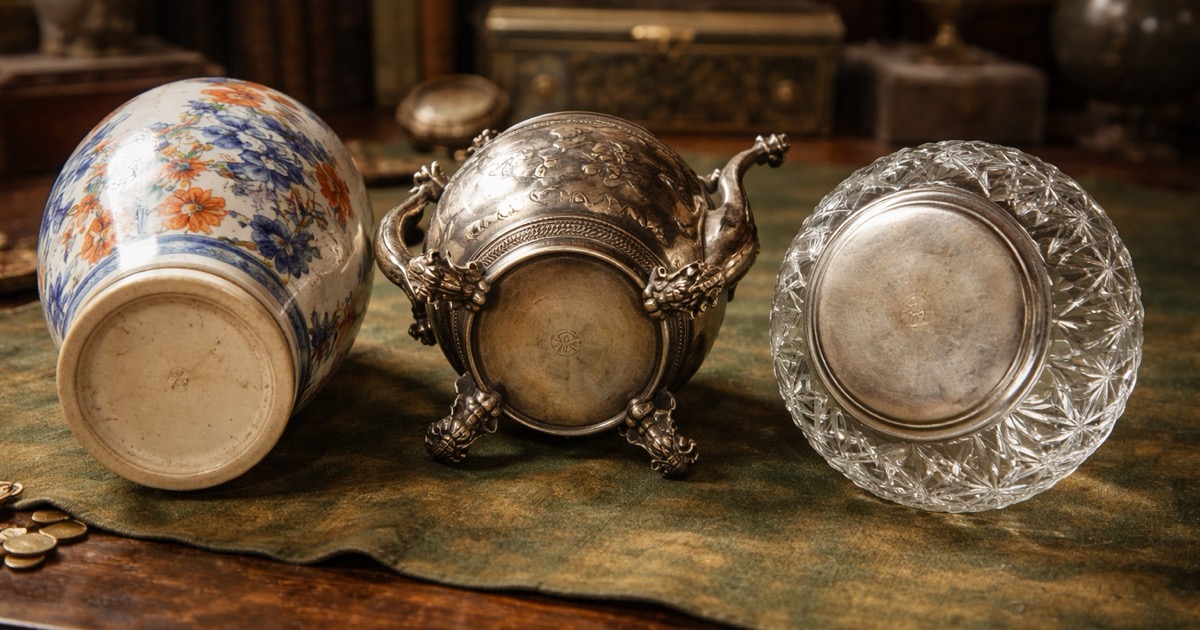
Antique marks identification becomes much easier once you stop treating every stamp like a magic answer. A mark can be extremely useful, but only when you read it alongside material, form, construction, and wear. The best marks narrow the field. They do not automatically prove age, maker, authenticity, or value on their own.
That is the right first-pass mindset whether you are looking at porcelain, silver, glass, furniture, or decorative metalware. Start by recording exactly what is on the object, where the mark appears, and how the object is made. Then use those clues together instead of searching the mark in isolation.
What antique marks can actually tell you
A good mark may help you identify one or more of these things:
- the maker or factory
- the country of origin
- the metal standard or silver content
- a registration or pattern number
- whether the item was made for a retailer rather than by the retailer
That matters because many objects carry more than one mark. A silver piece may include a standard mark, an assay mark, a date letter, and a maker’s mark. A porcelain piece may have a factory backstamp plus a pattern number. A piece of furniture might carry a retailer label that is later than the style itself.
This is why finding a mark is only the start. The real question is what kind of mark you found and whether it makes sense for the object in front of you.
Where to look for marks before you search anything
Different categories hide their most useful marks in different places. Before you start typing variations into search, inspect the most likely spots:
- porcelain and pottery: the base, foot ring, and backstamp area
- silver and plated wares: the underside, handle junctions, lids, and inner rims
- glass: the base, polished pontil area, or faint acid-etched logo
- furniture: the back, underside of drawers, locks, paper labels, and stamped frames
- decorative objects: screws, mounts, liner inserts, and removable parts
Take one full-object photo first. Then photograph each mark straight on and again from a slight angle. That second shot often makes shallow impressions or worn lettering easier to read.
How to read a mark without jumping to conclusions
When you find a stamp, work through it in this order:
- Transcribe exactly what you see, including partial letters, punctuation, and spacing.
- Note whether the mark is printed, impressed, engraved, acid-etched, punched, or molded.
- Check whether the style of the mark fits the material and category.
- Look for companion clues such as pattern numbers, country names, or standard marks.
- Compare the mark against the object’s form, wear, and construction before trusting it.
This order matters because many mistakes happen when people search an approximate phrase and force the object to fit the first result they like. A blurry 925-looking punch may not be sterling. A printed pseudo-old backstamp on porcelain may be a modern reproduction. A retailer name may tell you where something was sold, not who made it.
The mark types that show up most often
If you are new to antique marks identification, these are the main buckets to separate:
Maker’s marks
These identify a maker, factory, workshop, or company. They may be full names, initials, symbols, or logos. Maker’s marks are useful, but not always enough by themselves. Some factories changed marks over time, reused older motifs, or sold goods through retailers whose names also appear on the piece.
Hallmarks and standard marks
These appear most often on silver and some other metalware. They may indicate metal purity, assay office, date letter, or maker. This is one of the most structured forms of antique marks identification, but it still requires care. A silver-colored item can be plated, and a later retailer or import mark can confuse the dating if you only read one punch.
Backstamps
Common on porcelain, china, and pottery, backstamps can include the maker name, country, pattern line, and special production marks. Backstamps are useful, but you still need to compare the clay body, glaze, decoration method, and foot construction.
Registration and pattern numbers
These often help with narrowing period and design line rather than naming the maker cleanly. A registration number can point to when a design was registered, which is not always the same as the exact manufacture date of your specific object.
Retailer labels and import marks
These are commonly overtrusted. They may tell you who sold the item or which market it entered, but not necessarily who made it. For dating, that distinction matters.
Common mistakes that derail identification
The biggest errors are usually simple:
- misreading worn or partial letters
- assuming one mark dates the whole object
- ignoring replacement parts or later mounts
- treating decorative style as proof of age
- trusting a mark that looks too crisp for the wear on the rest of the object
One of the most common problems is searching the mark without checking whether the material fits. If a result suggests old sterling silver but the object is lightweight, magnetic, or clearly plated at the high points, stop and reassess. If a porcelain mark looks promising but the body and glaze feel modern, do not let the stamp override the physical evidence.
A practical workflow for antique marks identification
Use this sequence when you want a fast but grounded first pass:
- Take one full-object photo.
- Take close-ups of every mark, label, number, and damaged area.
- Write down the exact wording and symbol shapes you see.
- Identify the object category first: silver, porcelain, glass, furniture, or something else.
- Compare the mark to material and construction clues.
- Look for secondary marks or pattern numbers that support or weaken the first reading.
- Only after that, move to pricing or appraisal questions.
That last step matters. Too many people jump from “I found a mark” to “what is it worth?” If value is the next question after identification, use a grounded guide like Antique Price Guide: How to Estimate What It’s Worth rather than assuming the first named maker guarantees a high price.
Photo tips that improve mark reading
You will get better results from your own research and from Best Antique Identification App: What to Look For if you photograph marks well.
For the best close-ups:
- use window light instead of harsh flash when possible
- take one shot straight on and one from a slight angle
- crop tightly, but keep enough surrounding material visible for context
- photograph the whole object as well as the mark
- gently remove dust before shooting, but do not overclean
On reflective metal, small shifts in angle can make hallmarks readable. On ceramics, include the full base and foot ring rather than only the center stamp. On furniture or larger objects, take a wide shot showing where the label or mark appears on the body.
When to keep researching and when to get help
The purpose of this process is to narrow the field, not manufacture certainty. If the object appears unusually rare, heavily altered, or potentially valuable, move from first-pass identification to deeper verification. That may mean stronger reference books, specialist archives, or a professional opinion. Antique Appraisal Guide: When to DIY and When to Hire Help is the better next step when the stakes get higher.
For everyday thrift-store, estate-sale, and family-clearout decisions, though, a disciplined mark-reading workflow will usually get you much farther than random searching. Read the mark, check the material, compare the wear, and let the evidence agree before you trust the result.