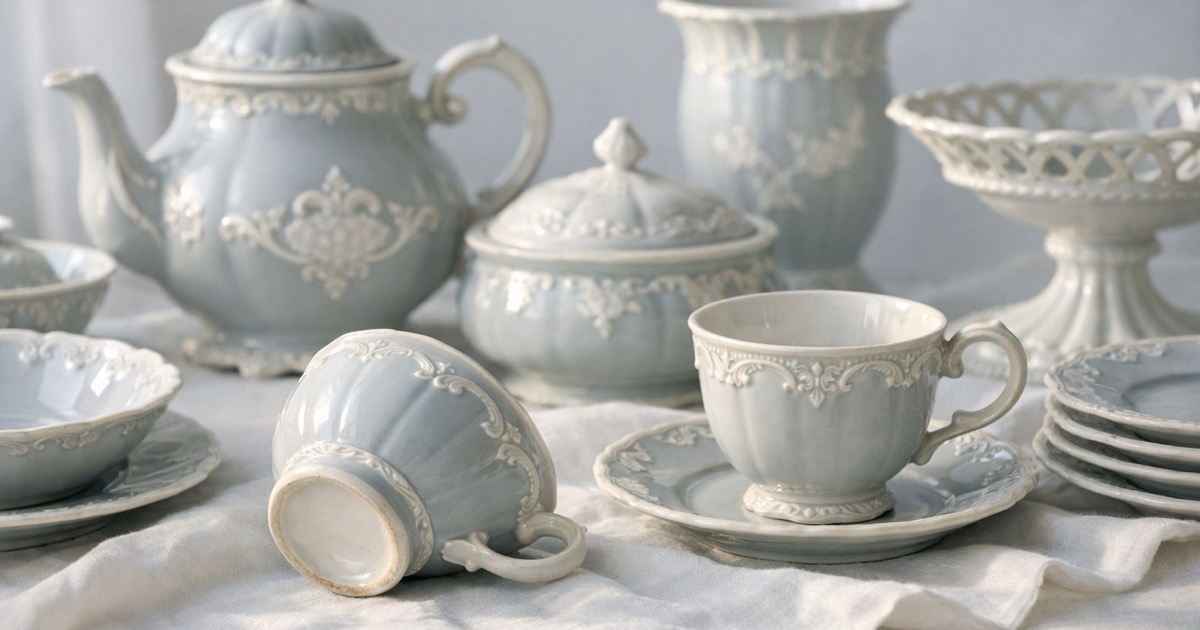
Antique porcelain marks identification works best when you treat the backstamp as one clue rather than the whole answer. A porcelain mark can be very helpful, but it makes the most sense when you read it together with the body, glaze, decoration method, foot ring, and overall construction.
That matters because porcelain is full of lookalikes. Old factories changed marks over time. Later companies borrowed earlier-looking styles. Reproductions often copy decorative motifs and add pseudo-old stamps that look convincing in isolation. The safest approach is to read the mark, then check whether the rest of the object agrees with it.
Start with the base, not the pattern name
If you are trying to identify antique porcelain, the base usually gives you more reliable evidence than the front decoration. Before you search anything, look closely at:
- the backstamp or printed factory mark
- impressed marks or shape numbers
- the foot ring and how neatly it was finished
- the body color and translucency
- wear on the base and rim
Write down the exact wording, symbol shapes, and any numbers. Small differences matter. A single extra word, crown shape, or country name can point to a different period or a later version of a mark.
What porcelain marks can actually help you identify
A useful porcelain mark may help you narrow:
- the factory or workshop
- the country of origin
- a rough production period
- a pattern or design number
- whether a piece was made for export or domestic sale
That is useful, but not complete. The mark still needs to fit the object. If the stamp looks old but the glaze, shape, or wear looks modern, trust the mismatch and keep digging.
How to read antique porcelain marks more carefully
A practical first pass looks like this:
- Photograph the full object.
- Photograph the entire base and foot ring.
- Take close-ups of the mark straight on and from a slight angle.
- Record the exact text, numbers, and symbols.
- Check whether the body, glaze, and decoration support the mark.
That fifth step is where many identifications improve. A convincing backstamp on a modern-feeling body should make you cautious. Likewise, a worn or partial mark may still be enough when the porcelain body and decoration style strongly support a certain factory or period.
The physical clues that matter as much as the mark
Even when the stamp is readable, porcelain identification should include a few non-mark checks:
Body and translucency
Porcelain bodies tend to be finer and more translucent than heavier earthenware, but not every pale body is old porcelain. Use translucency as a supporting clue, not a standalone dating method.
Glaze and crazing
Crazing can happen on older pieces, but it is not a reliable clock on its own. Some newer wares craze artificially or develop surface patterns that imitate age. Crackle does not equal antique.
Decoration method
Check whether the design looks hand-painted, transfer-printed, stenciled, or overglaze decorated. This can tell you as much about production era and quality as the mark itself.
Foot ring and wear
The underside often reveals more than the front. Natural wear on the foot ring, slight roughness where the glaze stops, and the overall finish quality can help you decide whether the mark belongs on the piece or was meant to imitate something older.
Common mistakes in antique porcelain marks identification
These are the ones worth slowing down for:
- dating only by crackle glaze
- assuming all blue-and-white ware is old
- trusting a printed mark without checking the base
- ignoring modern reproduction stamps
- treating a pattern number as if it were a date
Another common problem is searching only the obvious maker name without checking for country wording. Made in, England, Japan, and similar export wording can strongly affect the likely date range. The mark is not just a name. It is a combination of words, symbols, and placement.
A simple workflow for real-world porcelain research
If you picked up a porcelain piece at a thrift store, flea market, or family clear-out, this workflow is usually enough for a sensible first pass:
- Take a full-object photo.
- Photograph the base, foot ring, and mark.
- Note body color, glaze finish, and decoration method.
- Search the mark with the exact wording and any visible numbers.
- Compare the mark result with the physical object before trusting it.
- If the category seems promising, move on to maker-specific research or appraisal.
If value becomes the next question, do not jump from “I found the factory” to “this must be expensive.” Price still depends on pattern, condition, rarity, and demand. Antique Price Guide: How to Estimate What It’s Worth is a better next read when you reach that stage.
Photo tips for porcelain marks and base clues
Porcelain is easier to identify when the photos show the base clearly. For better research results:
- photograph the entire base, not only the center stamp
- take one sharp close-up of the mark and one angled shot
- capture decoration details near the rim or handle
- use soft daylight so glossy glaze does not blow out the mark
- show chips, repairs, and restored areas if they exist
These same habits improve app-assisted identification too. If you are using Best Antique Identification App: What to Look For, one full photo plus strong base and mark shots will produce a better first pass than a single front-facing beauty shot.
When to keep researching and when to get help
If the porcelain appears unusually early, highly decorated, or tied to a desirable factory, move past first-pass identification and into stronger verification. That may mean factory-mark references, pattern books, sold comparables, or professional help. Antique Appraisal Guide: When to DIY and When to Hire Help is the right next step when the financial stakes justify it.
For everyday identification, though, the best rule is simple: read the mark, inspect the base, and let the body and glaze confirm the story before you trust the result.
Related guides
- Nippon Porcelain Marks Identification
- Chinese Porcelain Marks: Reading Reign Marks
- Old China Marks Identification: What Backstamps Really Tell You
- China Makers Marks Identification: How to Read Old China Marks