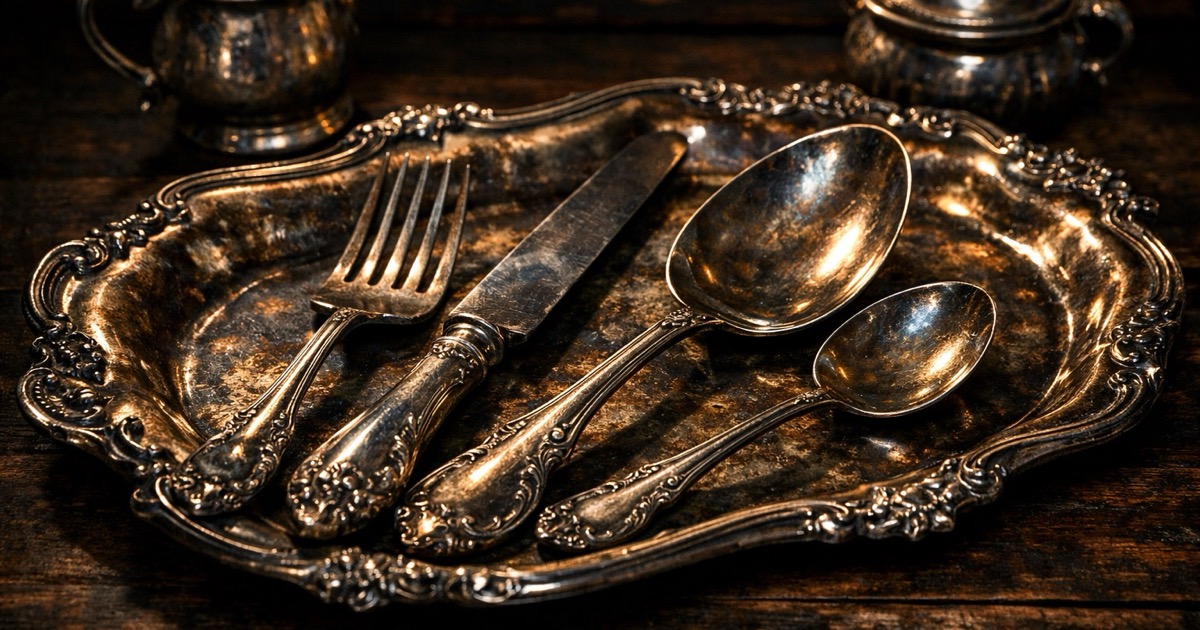
Sterling silver hallmarks identification is not really about memorizing one stamp. It is about reading a group of clues together: standard marks, assay symbols, maker’s marks, construction, weight, and wear. That is how you avoid the most common mistake in this category, which is assuming every silver-colored object is sterling because it looks old or polished.
If you approach silver with a more practical workflow, you can usually sort pieces into the right lane fairly quickly: sterling, silver plate, mixed metal, or something that needs a stronger second opinion.
Quick answer: what hallmarks should tell you first
On a true sterling piece, the marks often help answer some combination of these questions:
- what silver standard is claimed
- who made or sponsored the piece
- where it was assayed or sold
- whether there is a useful date letter or national standard mark
That sounds straightforward, but marks do not exist in a vacuum. A promising punch on a heavily worn plated object should make you cautious, not confident. Likewise, a retailer stamp may not be the same thing as the maker’s mark. The hallmark matters most when it fits the object’s construction and wear.
Start with the standard mark, not the monogram
When people first pick up an old silver-looking object, they often focus on the most decorative stamp or engraved monogram. That is usually not the best starting point.
Begin instead with:
- purity or standard marks such as
925,STERLING, or national standard symbols - assay-related symbols where relevant
- maker’s initials or punch
- additional retailer or import marks
- wear on edges, rims, and high points
That order helps because engraved decoration and family monograms can distract from the marks that actually identify the metal standard or maker. A monogram might tell you who owned the piece. It usually does not tell you whether it is sterling.
How to separate sterling from silver plate
This is the question behind a lot of sterling silver hallmarks identification searches. A few practical checks help:
Look for plating wear
Check the edges, foot rim, handle joints, and high points. If the underlying base metal is showing through in a different color, you may be looking at plated ware rather than solid sterling.
Read the wording carefully
Terms such as EPNS, silver plate, quadruple plate, and similar language point away from sterling. By contrast, STERLING or 925 can be useful signs, but they still need to make sense with the object’s overall quality and wear.
Consider weight and feel
Sterling often feels more substantial than lightweight plated hollow ware, though this is a supporting clue rather than proof on its own.
Use a magnet cautiously
A magnet is not a universal test, but it can still be a useful warning sign in some cases. If a supposedly sterling object reacts strongly, stop and reassess. No single magnet test confirms authenticity, but an unexpected reaction can tell you to look closer.
The hallmark types you are most likely to encounter
Depending on country and period, a sterling object may carry several different marks. Common categories include:
- standard or purity marks
- assay office marks
- date letters
- maker’s or sponsor’s marks
- retailer or import marks
The important part is reading the group, not one isolated punch. A useful hallmark set behaves like a sentence rather than a single word.
Common mistakes in sterling silver hallmarks identification
These are the errors that cause the most bad listings and false excitement:
- assuming silver color means sterling
- polishing the piece before documenting the marks
- mistaking a retailer mark for the maker
- reading only the clearest punch and ignoring the rest
- overlooking repairs, replacement handles, or loaded bases
Another common issue is trying to date the entire object from one small mark without checking whether the construction supports that conclusion. A later repair or replacement part can add a mark that does not date the whole piece.
A practical silver workflow
If you want a repeatable process, use this order:
- Take one full photo of the object.
- Photograph every hallmark, including faint partial punches.
- Check high points and edges for plating wear.
- Record the exact letters, numbers, and symbols.
- Compare the marks as a group instead of one at a time.
- Check whether the weight, construction, and wear support the reading.
- Only then move on to value or resale questions.
That final step matters. Even correctly identified sterling can vary enormously in desirability depending on maker, condition, completeness, and market demand. If pricing is the next question, Antique Price Guide: How to Estimate What It’s Worth is the better framework than treating the hallmark alone as a value shortcut.
Photo tips for tiny silver marks
Small silver hallmarks are easy to misread in bad lighting. For better results:
- use indirect daylight rather than a harsh flash
- take one straight-on macro shot and one from a slight angle
- include a wider photo showing where the mark sits on the piece
- capture worn edges and any spots where plating may show
- avoid heavy polishing before photographing
This is exactly the kind of category where Best Antique Identification App: What to Look For can help. Clear photos of the whole object plus the hallmarks give the app more useful evidence than a single cropped stamp.
When to stop DIY research and get a stronger opinion
If the marks suggest a notable maker, an early date, or an unusually valuable form, move from app-based first pass to deeper verification. That might mean specialist hallmark references, sold comparables, or a professional opinion. Antique Appraisal Guide: When to DIY and When to Hire Help is the right next step when the financial stakes rise.
For everyday identification, though, the goal is simpler: read all the marks, check for plating wear, and let the physical evidence support the hallmark reading before you trust it.
Related guides
- Silver Plate vs Sterling Silver: How to Tell the Difference
- Silver Makers Marks Identification: How to Read Maker Stamps