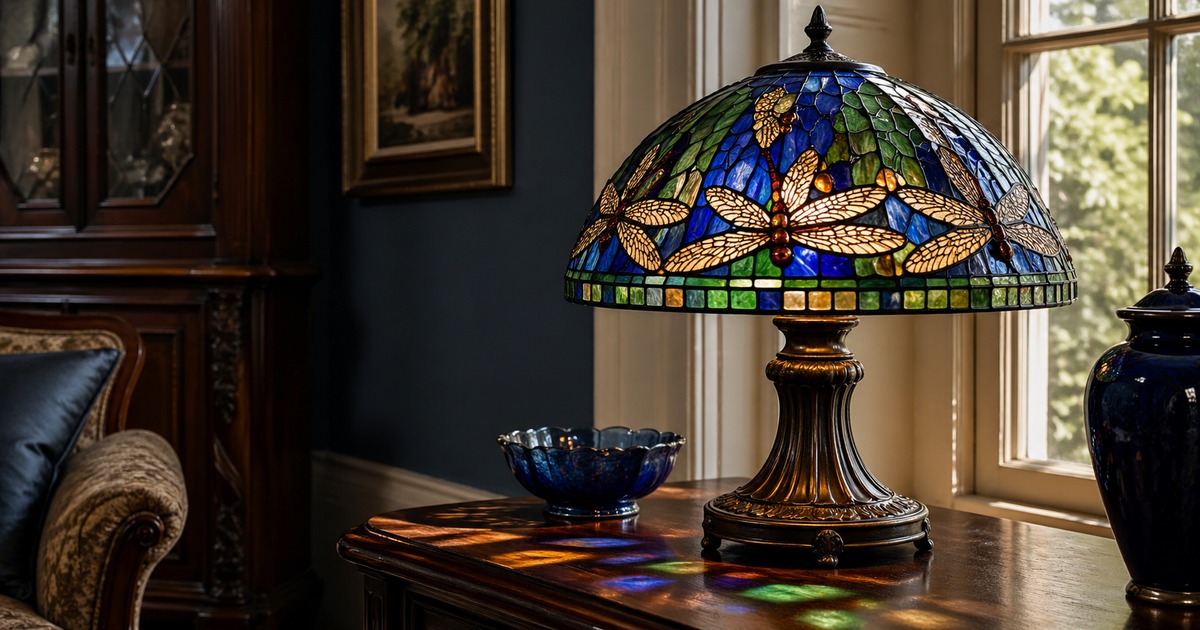
If you are trying to work out how to tell if a tiffany lamp is real, start with the evidence that is hardest to fake: marks, material, construction, and wear. This guide gives you a practical first-pass workflow so you can narrow what you have before you decide whether to keep researching, list it for sale, or ask for a professional appraisal.
The goal is not to promise certainty from one photo. The goal is to help you ask better questions, take better photos, and spot the clues most likely to move the identification forward.
Quick identification checklist
- Check the manufacturer mark on the base or under the felt.
- Check the socket housing for stamped initials or patent dates.
- Check the shade fitter type and shade signing.
- Check the wiring style and plug shape.
- Check the weight, casting quality, and base construction.
What to inspect first
Begin with the parts of the object that carry the most diagnostic value. For this topic, that usually means manufacturer mark on the base or under the felt, socket housing for stamped initials or patent dates, and any visible maker’s marks, labels, or numbers. Write down exactly what you see before you start searching. Small wording differences on marks matter.
If the object has damage or repairs, note those too. A replacement lid, repaired foot, or modern screw can change both the dating and the confidence of your identification.
Step-by-step identification process
- Photograph the whole object first so the shape and proportions are clear.
- Capture close-ups of manufacturer mark on the base or under the felt and any distinctive marks or labels.
- Compare the material, finish, or construction details with known examples from trusted references.
- Check whether the wear pattern matches real use and age or looks artificially added.
- Use Antique Identifier as a shortcut to narrow the likely category, era, or maker, then verify against stronger references if the item seems important.
What a real Tiffany Studios lamp looks like
True Tiffany Studios lamps are heavy, are signed in specific places, and use distinctive leaded-glass construction. The bronze base usually carries ‘TIFFANY STUDIOS NEW YORK’ along with a model number, often impressed into a small recess. The shade carries a small bronze tag riveted to the lower inside rim, signed similarly with a model number. A lamp marked only on the shade or only on the base, with no consistent pattern across both, is suspect.
The glass and lead pattern are equally telling. Tiffany used hand-rolled, multi-color glass with a depth and irregularity that is hard to fake. Each piece of glass varies slightly. Modern reproductions, including high-quality Chinese-made pieces, often use machine-rolled glass with too-uniform color and a regular grid of lead. The lead lines themselves are darker and rougher on originals, where solder oxidation has had a century to settle in.
Weight and construction confirm. A genuine Tiffany shade is heavy because the glass is thick and the lead is substantial. The bronze base is solid cast and feels considerably heavier than the painted-metal reproductions. Many fakes use a lighter alloy or even spun brass. If a lamp feels light for its size, glows too evenly, or has a perfectly uniform glass color, slow down before believing the signature. A real Tiffany is almost always confirmed by an expert before any large purchase.
Watch-outs and common mistakes
- calling any leaded shade a Tiffany.
- trusting a brass tag alone without supporting marks.
- ignoring rewired lamps that hide original socket marks.
- missing modern reproductions with intentionally aged finishes.
Photo tips that improve identification
- lift the felt and photograph the underside of the base.
- capture the socket and any stamped markings.
- shoot the shade fitter and any signature on the inside rim.
Putting it all together
No single clue settles how to tell if a tiffany lamp is real on its own. Marks can be added later, materials can be substituted, and wear can be faked. What gives you a confident identification is a stack of consistent evidence: the mark agrees with the material, the material agrees with the construction, and the construction agrees with the era the mark suggests. When all three line up and the wear looks honest for an object that age, you usually have what you think you have.
When one clue disagrees with the others, slow down rather than forcing a conclusion. A common pattern is a real period body with a later mark added to lift value, or a modern reproduction with a legitimate-looking signature. Documenting the disagreement in your notes is more useful than hand-waving past it. If a piece might be valuable, the cost of a second opinion from a specialist is small compared to the cost of getting it wrong.
Related guides
- Antique Oil Lamp Identification
- How To Tell If Furniture Is Antique
- How to Tell the Age of a Quilt
- How To Tell The Difference Between Pressed Glass And Cut Glass
When to use the Antique Identifier app
The app is most useful after you have taken one full photo and a few tight detail shots. It can help narrow the likely type, era, and material, which makes your follow-up research faster. If the result points to something unusually rare, signed, or high value, treat that as a prompt for deeper verification rather than a final answer.