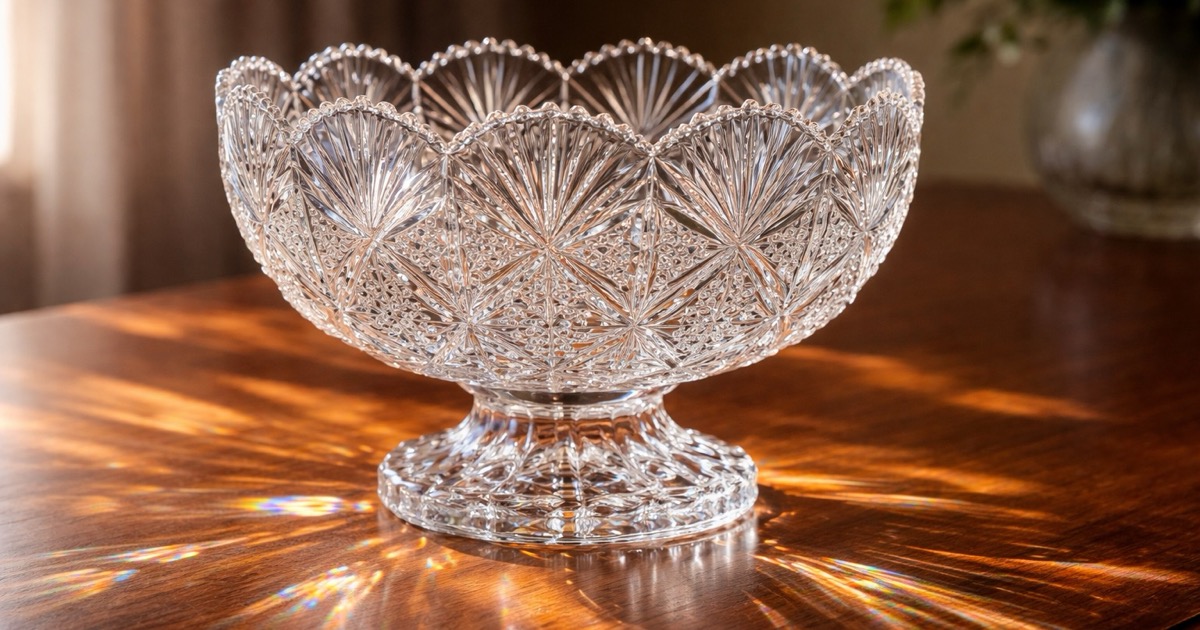
If you want to know how to tell if cut glass is antique, the fastest way to go wrong is to focus on sparkle alone. Antique cut glass can look brilliant, but so can later decorative glass. The more reliable clues are in the workmanship: how deep the cuts are, whether the pattern looks hand-finished, what the base shows, how the rim feels, and whether there are mold seams that point to pressed or machine-made glass instead.
That is the key distinction. Many people use “cut glass” to describe any heavy patterned glass, but true cut glass and pressed glass are not the same thing. A practical first pass is not about memorizing one pattern name. It is about separating hand-finished cutting from molded patterning, then checking whether the wear and construction support real age.
Start with the difference between cut glass and pressed glass
Before you try to date anything, make sure you are looking at the right category.
Cut glass is typically decorated after the blank form is made. The pattern is cut or ground into the surface, which often creates sharper edges, deeper facets, and a more deliberately finished look.
Pressed glass is formed in a mold. The design is created by the mold itself, so the pattern may repeat with more uniformity and the glass often shows molding clues that cut glass does not.
This matters because a lot of “antique cut glass” listings are really pressed glass, and that changes both identification and value expectations.
What to inspect first
When checking a piece, look at these areas before anything else:
- the pattern depth and sharpness
- the base and any pontil or polished area
- possible mold seams
- the rim and whether it looks hand-finished
- natural wear on the base and high points
One clue on its own rarely settles it. The goal is to see whether the whole object behaves like old hand-finished cut glass or like later molded glass.
Signs that the piece may be antique cut glass
There is no single guarantee, but these signs help:
Deep, confident cutting
Antique cut glass often has pattern lines that feel deliberate rather than soft or merely molded into the surface. On a well-made example, the cuts usually catch the light in a very crisp way and vary slightly with hand-finishing.
A base that makes structural sense
The underside can tell you a lot. Some older pieces show a polished pontil area or a base finish that looks more worked than molded. That does not automatically make it antique, but it is a stronger clue than surface sparkle.
Real wear where you would expect it
Natural wear usually appears on the base ring, foot, and other contact points. The wear should fit how the object would actually have been used. Random scuffing or artificially dulled edges can be misleading.
A hand-finished rim
Look at the top edge closely. A rim that feels carefully ground or finished by hand may support an older cut-glass reading. A uniform molded edge can push you in another direction.
Signs that the piece may be pressed glass or later decorative glass
These warning signs are just as important:
- visible mold seams running through the design
- pattern shapes that look molded rather than cut into the surface
- shallow patterning with little variation
- a base that looks machine-finished rather than hand-worked
- bubbles being used as the main proof of age
Bubbles are especially overtrusted. Air bubbles can appear in old glass, but they are not a safe dating shortcut. Plenty of later glass also shows bubbles or minor irregularities.
A simple workflow for identifying cut glass
Use this order if you are standing in a thrift store, antique mall, or estate sale:
- Take one full-object photo.
- Inspect the base and look for seams or a worked pontil area.
- Run your finger carefully near the pattern and rim to feel whether the detail seems cut or molded.
- Check the highest points and the base for believable wear.
- Compare the piece against the broader glass framework in Antique Marks Identification: How to Read Antique Marks and the app’s first-pass workflow in Best Antique Identification App: What to Look For.
That process is more reliable than starting with value. First identify the type. Then decide whether deeper research is worth your time.
Common mistakes people make
The most common errors are:
- treating bubbles alone as proof of age
- calling all patterned heavy glass “cut glass”
- ignoring obvious mold seams
- confusing wear from use with damage from poor storage
- assuming that a sharp pattern always means high value
That last point matters. Some cut glass is desirable, but the market still depends on form, condition, maker, and buyer demand. If you get to the value question, use a grounded framework like Antique Price Guide: How to Estimate What It’s Worth instead of assuming every old-looking piece is rare.
Photo tips that make glass easier to identify
Glass is hard to photograph well, which is why people misread it so often. For better identification:
- use side lighting to reveal seams and cutting depth
- place the object on a plain dark background
- photograph the full profile and the base separately
- take one close-up of the pattern and one of the rim
- avoid a direct flash that blows out detail
These habits also improve app-based identification. A full shot plus a clear base and pattern detail image will usually tell you more than one bright front-facing photo.
When to keep researching
If the piece looks unusually fine, unusually heavy, or clearly better than everyday decorative glass, it may deserve a second layer of research. That might mean checking maker references, pattern guides, or sold comparables. If the financial stakes feel real, Antique Appraisal Guide: When to DIY and When to Hire Help is the better next step.
For most readers, though, the practical goal is simpler: separate true cut glass from pressed glass, check whether the wear and base support age, and avoid buying a story that the object itself does not support.
Related guides
- Waterford Crystal Marks Identification
- How to Tell the Difference Between Pressed Glass and Cut Glass