

Identifying Antique Furniture Styles: Shape, Feet, and Joinery
Identifying antique furniture styles gets easier once you stop relying on one-word labels. Terms like Victorian, Georgian, Art Deco, and mid-century are useful, but they are only helpful when the shape, joinery, hardware, and materials all point in the same direction. Style is a clue. It is not proof on its own.
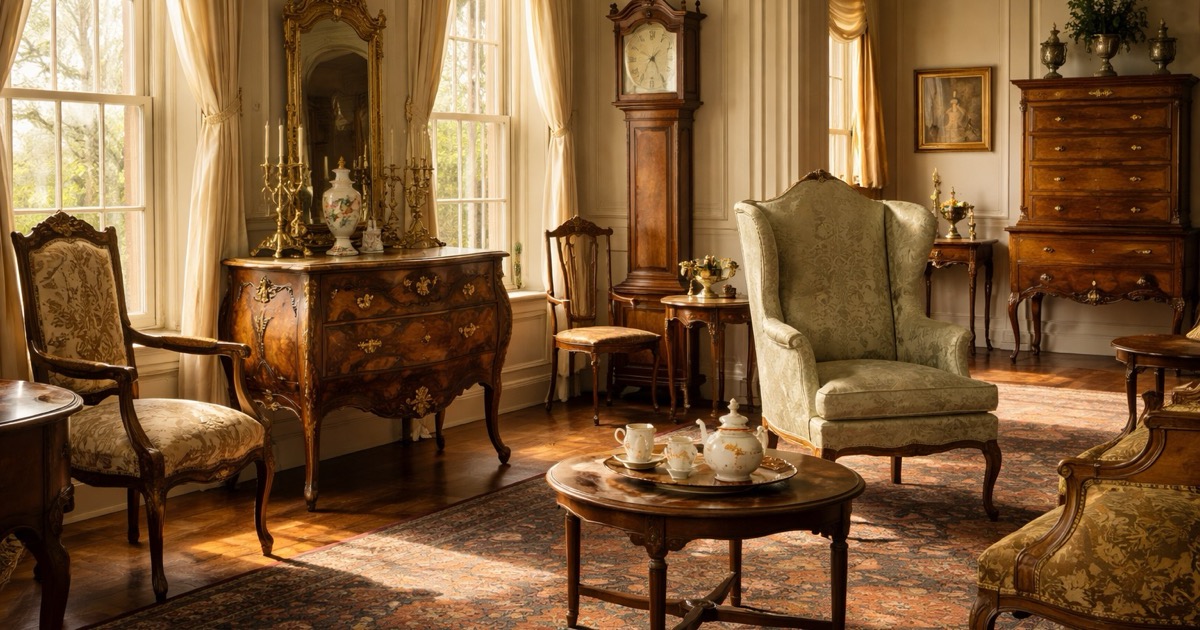
Identifying antique furniture styles gets easier once you stop relying on one-word labels. Terms like Victorian, Georgian, Art Deco, and mid-century are useful, but they are only helpful when the shape, joinery, hardware, and materials all point in the same direction. Style is a clue. It is not proof on its own.
That matters because furniture is one of the easiest categories to fake visually. A reproduction can borrow the silhouette of an earlier period while using obviously later construction. The safest approach is to start with overall form, then work downward into details.
Start with the silhouette before the small details
When you first look at a piece of furniture, step back and check:
- overall shape
- proportion
- leg form
- feet
- top profile or cresting
The silhouette often gives you the broadest period signal. A heavy ornate shape pushes you toward one family of styles, while cleaner geometry and simpler lines push you toward another. That does not finish the job, but it tells you where to look next.
The details that usually narrow the style fastest
Once you have the broad shape, focus on the details that tend to separate one style from another:
Feet
Furniture feet are often one of the quickest visual shortcuts. They can help you separate more elaborate earlier-inspired forms from later simpler ones.
Hardware
Pulls, escutcheons, hinges, and locks are useful, but only when they appear original to the piece. Replaced hardware can mislead you badly if you let it overrule the rest of the construction.
Joinery
Drawer construction, interior finishing, and how parts meet one another tell you far more than polish or decorative carving. Later machine precision can signal a reproduction or a later period even when the style imitates something older.
Materials
Wood choice, veneer use, and secondary woods matter. They should make sense with the supposed style and age.
A practical furniture-style workflow
If you are standing in front of a piece and want a first pass, use this order:
- photograph the full silhouette
- photograph the legs and feet
- photograph the hardware
- photograph drawer interiors, backs, or undersides
- check whether style and construction agree
That last step is the one buyers skip. A piece can look stylistically right at a distance while the joinery or hardware quietly says “later reproduction.”
Common traps when identifying furniture styles
These are the mistakes worth avoiding:
- dating only by decorative style
- assuming ornate means old
- trusting replaced hardware
- ignoring backs, undersides, and drawer interiors
- confusing revival pieces with true period pieces
Revival furniture is the main reason style work gets messy. A later revival piece can borrow the language of an earlier era without belonging to it.
Where marks and labels still matter
Furniture style identification is not only about form. Labels, retailer plaques, pencil notes, and stamped marks can help a lot when they survive. The important part is treating them as supporting evidence rather than the whole answer.
If you are working with labels or stamps, this post pairs well with Antique Marks Identification: How to Read Antique Marks. If you are focused on the general first-pass process, Best Antique Identification App: What to Look For explains how the app fits into that workflow.
How to photograph furniture for style identification
Furniture is large enough that poor photos hide the most useful clues. For better results:
- take one full front view
- take one side angle to show depth and proportion
- photograph feet and leg details
- photograph hardware straight on
- photograph the back, underside, or drawer construction
Those last images are often the ones that separate a style guess from a useful identification.
When style is enough and when it is not
For everyday sourcing, style can be enough to decide whether a piece deserves more research. It is especially useful for thrift-store and estate-sale triage. But if value, rarity, or authenticity matters, style must be backed up by construction and market research.
If you move into the value question, use Antique Appraisal Guide: When to DIY and When to Hire Help or Antique Price Guide: How to Estimate What It’s Worth after the identification stage. Style alone is too weak to price from.
The practical goal
The goal is not to memorize every style family in one sitting. The goal is to learn a repeatable way to read furniture: silhouette first, detail second, construction third, and story last. When those layers agree, style identification gets much more reliable.
Topics