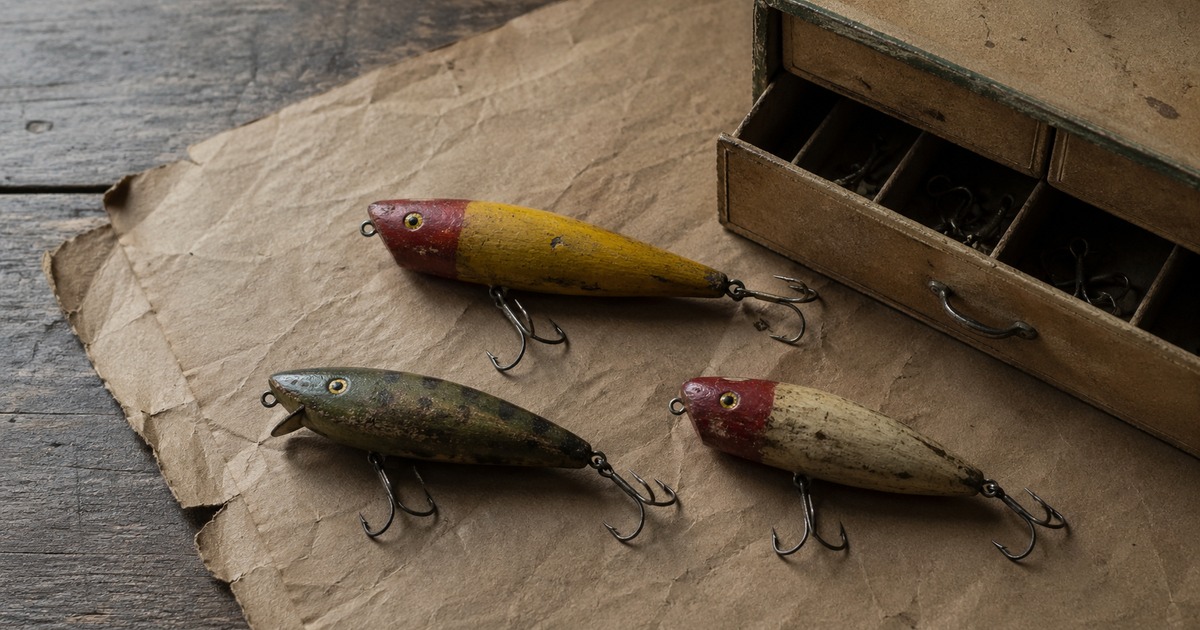
If you are trying to work out antique fishing lure identification guide, start with the evidence that is hardest to fake: marks, material, construction, and wear. This guide gives you a practical first-pass workflow so you can narrow what you have before you decide whether to keep researching, list it for sale, or ask for a professional appraisal.
The goal is not to promise certainty from one photo. The goal is to help you ask better questions, take better photos, and spot the clues most likely to move the identification forward.
Quick identification checklist
- Check the body material and length measured wood end to wood end.
- Check the hook hardware and line tie style.
- Check the paint pattern and eye style.
- Check the stamped maker marks on the lip, belly, or hardware.
- Check the presence and condition of the original box.
What to inspect first
Begin with the parts of the object that carry the most diagnostic value. For this topic, that usually means body material and length measured wood end to wood end, hook hardware and line tie style, and any visible maker’s marks, labels, or numbers. Write down exactly what you see before you start searching. Small wording differences on marks matter.
If the object has damage or repairs, note those too. A replacement lid, repaired foot, or modern screw can change both the dating and the confidence of your identification.
Step-by-step identification process
- Photograph the whole object first so the shape and proportions are clear.
- Capture close-ups of body material and length measured wood end to wood end and any distinctive marks or labels.
- Compare the material, finish, or construction details with known examples from trusted references.
- Check whether the wear pattern matches real use and age or looks artificially added.
- Use Antique Identifier as a shortcut to narrow the likely category, era, or maker, then verify against stronger references if the item seems important.
Wood, hardware, and the original box
Truly antique fishing lures are usually defined as those made roughly a century or more ago, with most desirable pieces dating from the late 1800s through the 1930s. Heddon, Pflueger, South Bend, Shakespeare, and Creek Chub are the most collected American makers from that era. Body material is the first clue. Pre-1940 lures are almost always carved from wood, often cedar or maple, with painted finishes. From the 1940s on, plastic bodies become standard, and a wood body alone suggests an older piece.
Hardware tells you almost as much as the body. Hook hangers, line ties, and eye types each have known production windows for major makers. Heddon used distinctive cup hardware, then surface hardware, then two-piece flap rigs across different decades, and the hardware on a body that does not match the maker’s known practice for that body style is a sign of either a repair or a misidentified piece. The eyes also matter. Glass eyes on pre-1940 lures, painted eyes on a few specific lines, and tack eyes on the very oldest pieces all help date a lure.
The box can multiply value. A clean original cardboard box with the right end label and printing can double or triple the value of a desirable lure compared to the same lure loose. Repainted lures, even when expertly done, lose most of their collector value. Look at paint chips with magnification. Original paint chips at clean edges and shows wood beneath. Repaints often cover original paint, leaving a soft, slightly rounded edge wherever the new paint stops.
Watch-outs and common mistakes
- assuming any wooden lure is pre-1940.
- valuing a chipped lure the same as a clean one.
- missing modern reissues with vintage-style boxes.
- ignoring repainted lures.
Photo tips that improve identification
- photograph belly, back, and both sides of the lure.
- capture any stamped marks on hardware close up.
- show the original box and end labels if you have them.
Putting it all together
No single clue settles antique fishing lure identification guide on its own. Marks can be added later, materials can be substituted, and wear can be faked. What gives you a confident identification is a stack of consistent evidence: the mark agrees with the material, the material agrees with the construction, and the construction agrees with the era the mark suggests. When all three line up and the wear looks honest for an object that age, you usually have what you think you have.
When one clue disagrees with the others, slow down rather than forcing a conclusion. A common pattern is a real period body with a later mark added to lift value, or a modern reproduction with a legitimate-looking signature. Documenting the disagreement in your notes is more useful than hand-waving past it. If a piece might be valuable, the cost of a second opinion from a specialist is small compared to the cost of getting it wrong.
Related guides
When to use the Antique Identifier app
The app is most useful after you have taken one full photo and a few tight detail shots. It can help narrow the likely type, era, and material, which makes your follow-up research faster. If the result points to something unusually rare, signed, or high value, treat that as a prompt for deeper verification rather than a final answer.