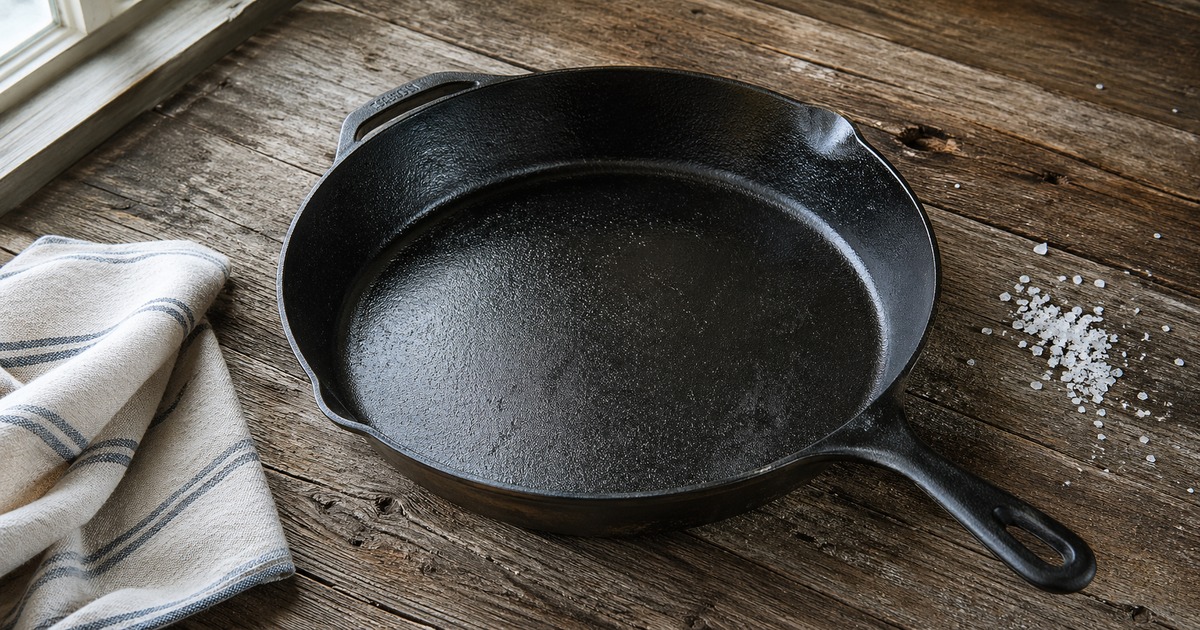
If you are trying to work out how to identify griswold cast iron skillets, start with the evidence that is hardest to fake: marks, material, construction, and wear. This guide gives you a practical first-pass workflow so you can narrow what you have before you decide whether to keep researching, list it for sale, or ask for a professional appraisal.
The goal is not to promise certainty from one photo. The goal is to help you ask better questions, take better photos, and spot the clues most likely to move the identification forward.
Quick identification checklist
- Check the maker logo on the bottom such as Griswold cross, Wagner Sidney O., or Erie.
- Check the size number and pattern number on the bottom or handle.
- Check the heat ring style and thickness.
- Check the handle shape, hole, and helper handle design.
- Check the casting smoothness and any post-foundry machining.
What to inspect first
Begin with the parts of the object that carry the most diagnostic value. For this topic, that usually means maker logo on the bottom such as Griswold cross, Wagner Sidney O., or Erie, size number and pattern number on the bottom or handle, and any visible maker’s marks, labels, or numbers. Write down exactly what you see before you start searching. Small wording differences on marks matter.
If the object has damage or repairs, note those too. A replacement lid, repaired foot, or modern screw can change both the dating and the confidence of your identification.
Step-by-step identification process
- Photograph the whole object first so the shape and proportions are clear.
- Capture close-ups of maker logo on the bottom such as Griswold cross, Wagner Sidney O., or Erie and any distinctive marks or labels.
- Compare the material, finish, or construction details with known examples from trusted references.
- Check whether the wear pattern matches real use and age or looks artificially added.
- Use Antique Identifier as a shortcut to narrow the likely category, era, or maker, then verify against stronger references if the item seems important.
Reading Griswold logos and pattern numbers
Griswold was based in Erie, Pennsylvania, and used a series of distinctive logos that tie a skillet to a specific era. The most desirable mark for many collectors is the ‘large block’ Erie logo, used in the late 1800s. The ‘slant logo’ with ‘ERIE PA. U.S.A.’ beneath came next, followed by the more familiar cross-in-circle logo registered in 1909. After roughly 1939 the logo became smaller and simpler, often called the ‘small block’ or ‘small logo’ Griswold.
Numbers on the bottom of a Griswold skillet are not inches. The size number, like 8, 9, or 10, refers to a manufacturer’s pattern size, not the diameter. The pattern number, often a four-digit number like 704 or 716 on a No. 8, ties the piece to a specific casting record. Two skillets with the same size number can have different pattern numbers if Griswold revised the mold over the decades.
After Griswold was sold to Wagner in 1957, some Griswold-marked pieces were actually cast in the Wagner Sidney Ohio foundry. These later pieces often lack the ‘Erie’ word on the bottom and feel slightly different in the hand because the patterns were modified. They are still genuine Griswold-branded production, but they belong to a different period and trade at different prices than pre-1957 Erie-cast skillets.
Watch-outs and common mistakes
- treating size number as inches.
- mistaking unmarked Wagner-era Griswolds for fakes.
- assuming all bare cast iron is antique.
- missing modern reproductions of Griswold logos.
Photo tips that improve identification
- photograph the bottom of the pan with the logo centered.
- capture the handle top and any pattern number.
- show the cooking surface in raking light to reveal pitting.
Putting it all together
No single clue settles how to identify griswold cast iron skillets on its own. Marks can be added later, materials can be substituted, and wear can be faked. What gives you a confident identification is a stack of consistent evidence: the mark agrees with the material, the material agrees with the construction, and the construction agrees with the era the mark suggests. When all three line up and the wear looks honest for an object that age, you usually have what you think you have.
When one clue disagrees with the others, slow down rather than forcing a conclusion. A common pattern is a real period body with a later mark added to lift value, or a modern reproduction with a legitimate-looking signature. Documenting the disagreement in your notes is more useful than hand-waving past it. If a piece might be valuable, the cost of a second opinion from a specialist is small compared to the cost of getting it wrong.
Related guides
- Vintage Pyrex Patterns Identification
- Antique Cast Iron Toy Identification
- How to Identify Antique Oriental Rugs
- How to Identify Wedgwood Marks and Date
- How to Identify Unmarked Cast Iron Cookware
When to use the Antique Identifier app
The app is most useful after you have taken one full photo and a few tight detail shots. It can help narrow the likely type, era, and material, which makes your follow-up research faster. If the result points to something unusually rare, signed, or high value, treat that as a prompt for deeper verification rather than a final answer.