If you are trying to work out how to identify wedgwood marks and date, start with the evidence that is hardest to fake: marks, material, construction, and wear. This guide gives you a practical first-pass workflow so you can narrow what you have before you decide whether to keep researching, list it for sale, or ask for a professional appraisal.
The goal is not to promise certainty from one photo. The goal is to help you ask better questions, take better photos, and spot the clues most likely to move the identification forward.
Quick identification checklist
- Check the backstamp or impressed mark.
- Check the clay body color.
- Check the glaze finish and crazing.
- Check the hand-painted vs transfer decoration.
- Check the rim, foot, and handle construction.
What to inspect first
Begin with the parts of the object that carry the most diagnostic value. For this topic, that usually means backstamp or impressed mark, clay body color, and any visible maker’s marks, labels, or numbers. Write down exactly what you see before you start searching. Small wording differences on marks matter.
If the object has damage or repairs, note those too. A replacement lid, repaired foot, or modern screw can change both the dating and the confidence of your identification.
Step-by-step identification process
- Photograph the whole object first so the shape and proportions are clear.
- Capture close-ups of backstamp or impressed mark and any distinctive marks or labels.
- Compare the material, finish, or construction details with known examples from trusted references.
- Check whether the wear pattern matches real use and age or looks artificially added.
- Use Antique Identifier as a shortcut to narrow the likely category, era, or maker, then verify against stronger references if the item seems important.
Reading Wedgwood letter date codes
Wedgwood is one of the most carefully marked English potteries, which makes accurate dating possible from the base alone. Most Wedgwood pieces carry the impressed name ‘WEDGWOOD’ along with one or more letter date codes used between 1860 and the early 1900s. The letter system uses three letters: the first letter is the month, the second is the potter who threw the shape, and the third is the year. The year letters cycled through the alphabet starting at ‘O’ for 1860. So a code ending in ‘O’ means 1869 in the second cycle, ‘Y’ indicates 1875, and so on, with the cycles repeating in different fonts so collectors can tell which decade applies.
The country mark refines the post-1891 picture. The McKinley Tariff Act of 1890 required imports to the United States to be marked with country of origin. Wedgwood added ‘ENGLAND’ to the mark from 1891 onward. From 1908 onward ‘ENGLAND’ was replaced by ‘MADE IN ENGLAND’ on most pieces. So a piece marked WEDGWOOD without ENGLAND is generally pre-1891, with ENGLAND alone is 1891 to 1908, and with MADE IN ENGLAND is 1908 onward.
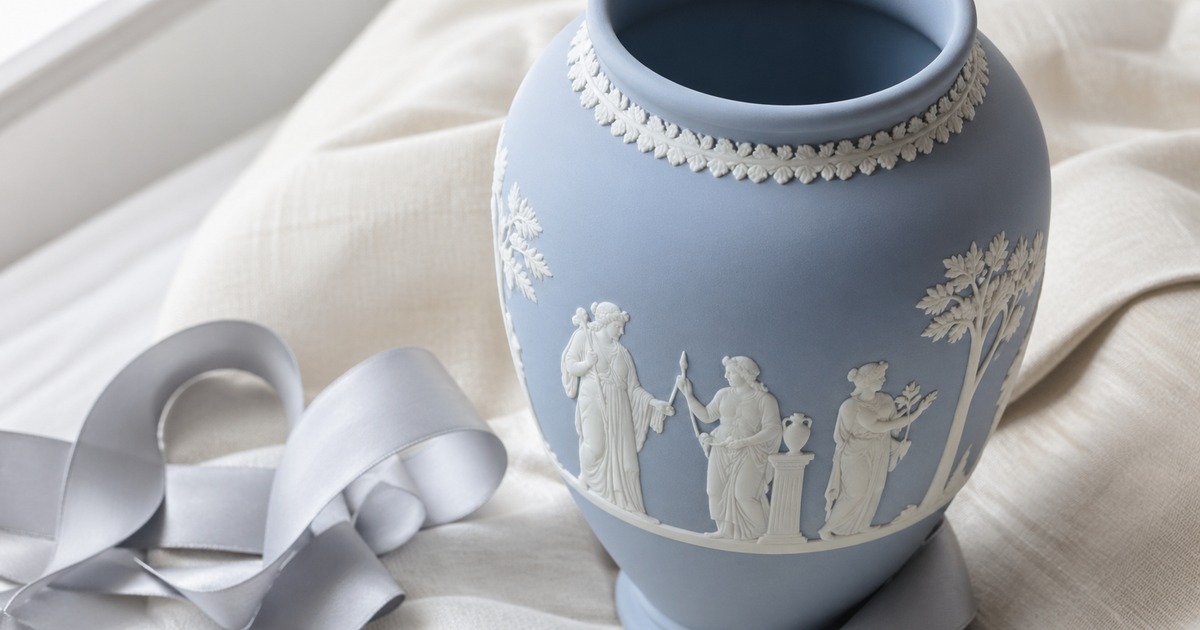
Body and color narrow Jasperware specifically. Solid black Jasper was produced from about 1778 to 1826. Pale blue Jasperware in solid form is also typical of that early period. Three-color and laminated Jasper pieces, where colors are layered rather than dyed all the way through, are mostly later 19th century and 20th century. Piece by piece, you read the marks together: name, country word, letter code, and Jasper body should all line up. When one of them disagrees, treat the piece as a candidate for refinement or as a marriage.
Watch-outs and common mistakes
- dating only by crackle glaze.
- assuming all blue-and-white ware is old.
- ignoring modern reproduction stamps.
Photo tips that improve identification
- photograph the base and foot ring.
- take a close-up of decoration details.
- show translucency only if safe and appropriate.
Putting it all together
No single clue settles how to identify wedgwood marks and date on its own. Marks can be added later, materials can be substituted, and wear can be faked. What gives you a confident identification is a stack of consistent evidence: the mark agrees with the material, the material agrees with the construction, and the construction agrees with the era the mark suggests. When all three line up and the wear looks honest for an object that age, you usually have what you think you have.
When one clue disagrees with the others, slow down rather than forcing a conclusion. A common pattern is a real period body with a later mark added to lift value, or a modern reproduction with a legitimate-looking signature. Documenting the disagreement in your notes is more useful than hand-waving past it. If a piece might be valuable, the cost of a second opinion from a specialist is small compared to the cost of getting it wrong.
Related guides
- Nippon Porcelain Marks Identification
- How To Identify Pewter Marks
- How to Identify Antique Oriental Rugs
- Antique Pottery Marks
When to use the Antique Identifier app
The app is most useful after you have taken one full photo and a few tight detail shots. It can help narrow the likely type, era, and material, which makes your follow-up research faster. If the result points to something unusually rare, signed, or high value, treat that as a prompt for deeper verification rather than a final answer.