


How to Identify Real Jade (and Spot Dyed or Fake Jade)
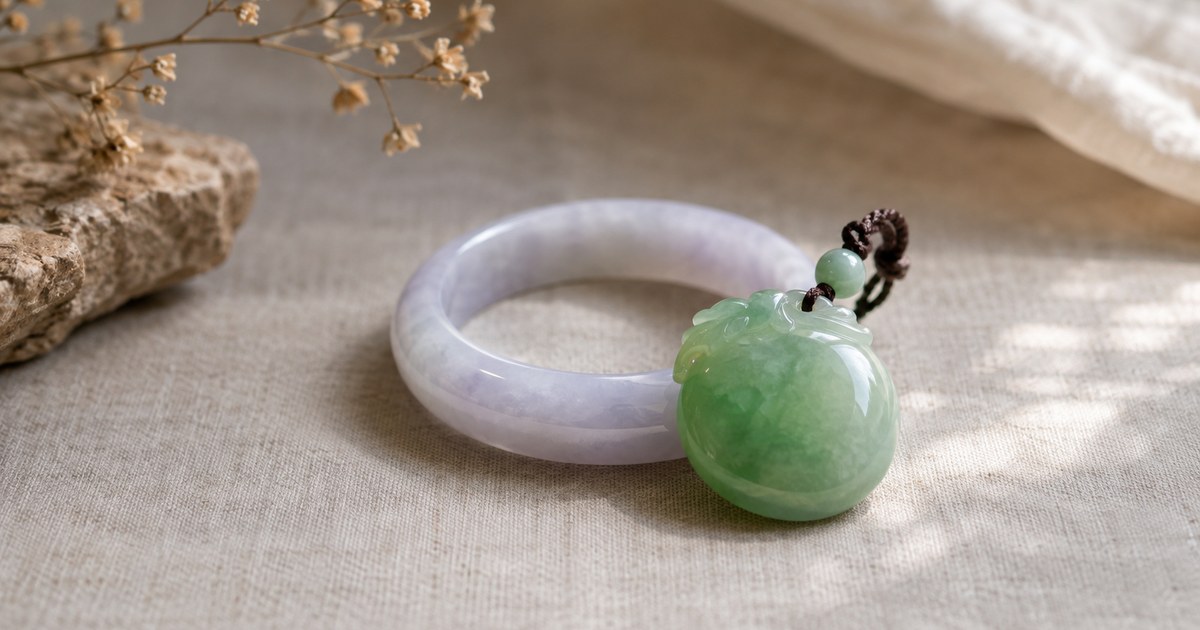
Almost every article on how to identify real jade opens with the same trick: press the stone to your cheek and see whether it feels cold. It is a real observation, and it is nowhere near enough. Plenty of stones that are not jade also feel cold, plenty of genuine jade is sold in a dyed or resin-treated condition that changes what you are actually buying, and the word “jade” itself covers two different minerals that the trade values very differently. If you want a useful answer rather than a comforting one, you have to run several checks and see whether they agree.
Real jade is either jadeite or nephrite. To assess a piece at home, test three things together: density (jade feels notably heavy for its size), thermal behavior (it feels cold on contact and warms slowly), and internal structure under magnification (a fibrous or granular texture rather than swirls, bubbles, or dye pooling in surface cracks). No single test is conclusive.
Quick identification checklist
- Heft it. Real jade is dense. Compared against a same-size piece of glass, plastic, or serpentine, it should feel distinctly heavier in the hand.
- Touch test, done properly. Rest it against your cheek or the inside of your wrist. Jade reads cold on first contact and warms slowly. A stone that comes up to skin temperature almost immediately is suspect.
- Backlight it. Hold it against a bright light source. Most genuine jade shows some translucency with a soft, slightly cloudy internal character rather than a glassy clear body or a completely dead opaque one.
- Look for bubbles. Any round internal bubbles mean glass, not jade. This is one of the few near-absolute tells.
- Check the cracks and surface pits. Under magnification, dye concentrates where the stone is fractured or porous, leaving color that follows the crack network instead of sitting evenly in the body.
- Listen to it. Two pieces of jade tapped together give a fairly resonant, ringing click. Plastic and most substitutes sound dull and flat.
- Inspect for seams. A visible mold line, or perfectly matched color and pattern across two supposedly separate pieces, points to molded glass or resin.
Jadeite, nephrite, and everything sold as “jade”
The trade recognizes two true jades. Jadeite is the rarer and generally more valuable of the two, it is slightly harder, and it is the material behind the finest translucent green pieces that command serious prices. Nephrite is the more common material, historically dominant in Chinese carving over a very long period, and it tends toward a somewhat waxier, more fibrous look with colors running through creams, spinach greens, and greys. Both are legitimately jade. A nephrite carving is not a fake.
What causes most of the confusion is the third category: stones sold under a jade-sounding name that are not jade at all. Serpentine is frequently marketed as “new jade” or under regional names, and it is softer, lighter, and often a touch greasier looking. Dyed quartzite turns up widely, sometimes under names that include the word jade, and under magnification its dye tends to sit in a web of color along grain boundaries rather than in the body of the stone. Glass shows up constantly at the low end and gives itself away with bubbles, mold seams, and a chill that fades fast. Modern resins and plastics are the easiest to catch by weight alone.
Why color tells you almost nothing
Color is the first thing buyers look at and the least reliable single indicator, because dyeing jade is common, cheap, and often disclosed only in fine print or not at all.
The trade has an informal grading language for this. Untreated material is the top tier. Material that has been bleached to remove brownish iron staining and then impregnated with polymer to restore stability and shine sits below it, and while the underlying stone can still be genuine jadeite, the treatment substantially changes what the piece is worth and how it will age. Dyed material sits lower still. A vivid, saturated, perfectly even green at a bargain price is a reason to look harder, not to congratulate yourself.
The practical consequence is that “is it real jade” and “is it untreated jade” are two different questions, and the second one is harder. At home you can build a reasonable case on the first and gather suggestive evidence on the second, but confirming treatment properly is laboratory work.
What magnification actually shows
You do not need special equipment to get a lot out of a close look, and a phone camera held steady with good light will reveal most of it.
Focus on the edges of drill holes, the insides of carved recesses, and any surface fractures. Dye migrates into those weak points during treatment and stays there, so on a dyed piece you see color concentrated in fine lines and pockets while the surrounding material is paler. On genuinely colored material, the color sits in the body of the stone and varies naturally rather than tracing a crack network.
Also look at texture. Jadeite typically shows an interlocking granular structure that can give a slightly dimpled or “orange peel” quality to a polished surface. Nephrite shows a fibrous, felted texture. Dyed quartzite tends to show a sugary sparkle of individual crystal faces. Glass shows nothing internal at all except bubbles and swirl lines.
How to identify real jade using three agreeing tests
Here is the discipline that separates a useful home assessment from wishful thinking. Pick three independent checks, run all three, and only draw a conclusion when they point the same direction.
A workable trio for most pieces: weight against size, thermal response, and magnified inspection of cracks and drill holes. If the piece is heavy, cold and slow to warm, and shows body color rather than crack-following dye, you have a genuinely reasonable case for real, reasonably untreated jade. If it is light, warms fast, and shows dye in the fissures, you have three signals agreeing in the other direction and you can stop.
The awkward middle happens when the tests disagree, and that is exactly when to stop guessing. Heavy and cold but with dye in the cracks probably means real stone that has been color-treated. Correct texture but suspiciously light might mean a thin jade veneer over another material. Mixed results are the point at which a gemological lab, not another blog post, gives you the answer.
Watch-outs and common mistakes
- The scratch test. Dragging a knife or a piece of steel across a stone risks permanent damage to a genuine piece and gives you a crude answer at best. Do not do it on anything mounted, carved, or valuable.
- Trusting a seller’s certificate photo. Certificates are easy to copy and hard to verify from an image. Treat one as a claim, not evidence.
- Assuming green means jadeite. Both jades occur in green, and so do several of the imitations.
- Reading translucency as quality on its own. Polymer impregnation can raise apparent translucency and gloss in material that would otherwise look dull.
- Believing any home test proves authenticity. These checks stack evidence. They do not authenticate, and anyone telling you a single trick settles it is oversimplifying.
Photo tips
- Shoot in soft, indirect daylight against a plain neutral background so the true body color is not skewed by warm indoor bulbs.
- Take one backlit frame with a bright light directly behind the piece to capture translucency and any internal cloudiness or veining.
- Get one very close, steady frame of a drill hole or carved recess, which is where dye evidence lives.
- Photograph any mount, clasp, or metal fitting separately, since hallmark evidence on the setting can help date and place the piece.
- Include a common object for scale, and note the weight on a kitchen scale in your notes rather than trying to convey heft in a picture.
Common questions
Does real jade always feel cold to the touch?
Real jade does feel cold on first contact and warms slowly, because it conducts heat away from your skin efficiently. The problem is that this is true of many stones, including several common jade substitutes. The test is genuinely useful for ruling out plastic and resin quickly, but it cannot distinguish jade from serpentine, quartzite, or glass on its own.
How can I tell if my jade has been dyed?
Look closely at fractures, drill holes, and carved recesses under strong light and magnification. Dye pools in those weak points, producing color that follows crack lines while the surrounding stone stays paler. Unnaturally uniform, highly saturated color across an entire piece is another warning sign. Confirming treatment definitively requires laboratory testing, so treat home observation as suggestive rather than final.
Is nephrite jade worth less than jadeite?
Generally the market places jadeite above nephrite, and top-grade translucent jadeite sits far above everything else. But quality within each material matters enormously, and a superb antique nephrite carving with good provenance can outperform mediocre jadeite comfortably. Craftsmanship, age, condition, and color quality all move the number, so avoid ranking a piece on material alone.
Related guides
- How to Identify Antique Jewelry Markings
- How to Test Antique Gold Jewelry at Home
- Sterling Silver Hallmarks: What the Marks Mean
- Best Antique Identification App: What to Look For
When to use the Antique Identifier app
Jade is a category where a photo-based first pass earns its keep as a triage step. Shoot the piece in daylight, add a backlit frame and one close shot of a drill hole or carved recess, and the app can suggest whether what you are holding reads as jadeite, nephrite, or one of the common substitutes, along with the carving style and likely period for antique pieces. That gives you a direction to test against rather than a blank page. Confirm anything that matters with the physical checks above, and send genuinely valuable candidates to a gemological lab.
Topics