


Antique Pocket Knife Identification
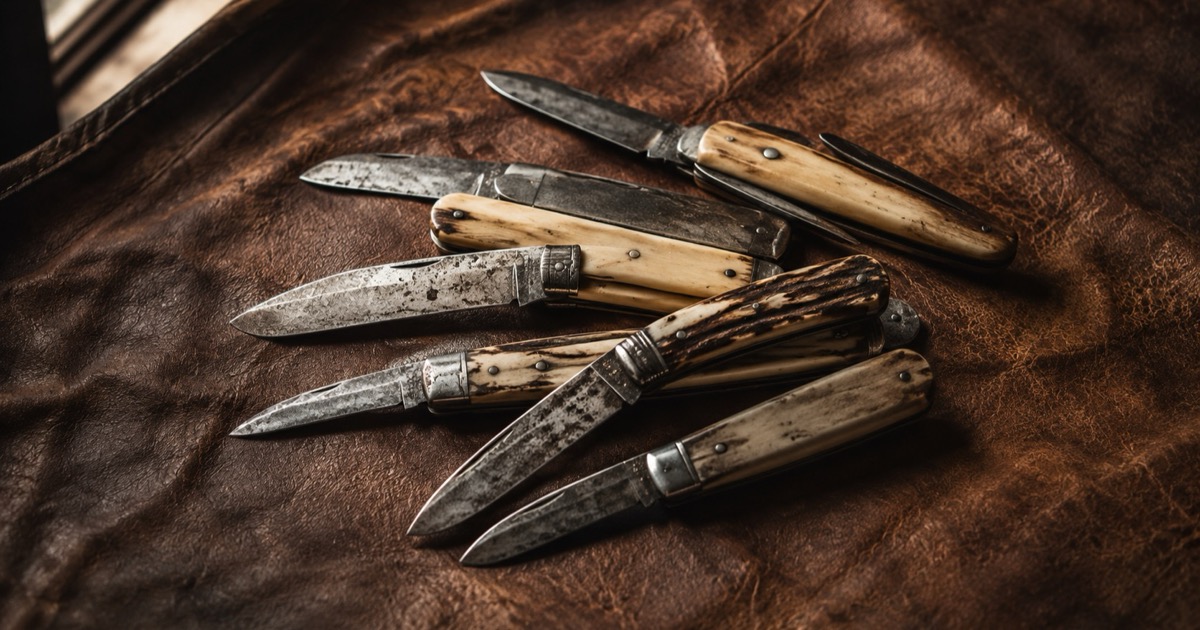
Antique pocket knife identification rests on one small piece of steel: the tang, the flat section at the base of the blade where the maker struck a stamp. That stamp, read together with the knife’s pattern, handle material, and blade shapes, will usually place a knife with a maker and a production era before you ever open a price guide.
To identify an antique pocket knife, open the master blade and read the tang stamp, the maker’s mark on the flat base of the blade, then match the frame to a named pattern such as trapper, stockman, or barlow. The stamp’s wording and layout, checked against published collector charts, usually narrows the maker and the production era.
By the end of this guide you will know how tang stamps narrow the date, what the classic patterns are called, how handle materials separate eras, and how to spot the re-stamped and reassembled knives that trip up new collectors.
Quick identification checklist
- Open the master blade fully and read the tang stamp on both the front and the back of the tang.
- Match the frame to a named pattern: trapper, stockman, barlow, congress, or peanut.
- Identify the handle material; jigged bone, delrin, stag, and celluloid each tell a different story.
- Look for a factory etch on the master blade and check that the blade shape suits the pattern.
- Compare wear across blades, springs, and bolsters; mismatched aging suggests mixed parts.
- Note blade loss from sharpening, cracked scales, and wobble before you think about price.
Tang stamps: the core of antique pocket knife identification
The tang stamp gives you the maker, and the style of the stamp narrows the era. Nearly every major American cutlery firm, including Case, Remington, Schrade, Camillus, Ka-Bar, Robeson, and Winchester, changed the wording, punctuation, and layout of its stamps over the decades, and collectors have charted those changes in detail. Two stamps that read almost identically can be twenty years apart, so copy down exactly what you see, including abbreviations and line breaks, before you search.
Case is the cleanest example of how far this can go. From 1970 onward the company has mostly used a dot-dating system, placing a row of dots beneath the stamp and removing one each year through the decade, with the stamp style itself changing as each new decade begins — with documented exceptions, including the early 1990s, when the date itself was stamped on the tang, and the 2000s, which combine X’s and dots. Published charts map every stamp-and-dot combination to a year. Earlier Case stamps, such as the Tested-era marks, belong to documented pre-1970 windows of their own. Other makers used different schemes or none at all, so never carry one brand’s dating logic across to another.
One caution before you celebrate a great stamp: it dates the blade it is struck on, not necessarily the whole knife. Blades get swapped, which is why the rest of this guide matters.
Classic patterns and what they tell you
Pattern names describe the frame and the blade arrangement, and they are the shared language of knife collecting. The trapper carries two full-length blades, a clip and a long spey, both hinged at the same end. The stockman is a serpentine three-blade knife, typically a clip master backed by a sheepsfoot and a spey. The barlow is the old workman’s knife, a teardrop frame with an extra-long bolster and one or two blades. The congress has a curved frame with a concave back and often four blades, a favorite of nineteenth-century whittlers. The peanut is the small two-blade knife that disappears into a watch pocket.
Patterns matter because factory pattern numbers encode them. Case’s numbering, for example, indicates handle material, blade count, and pattern in a documented sequence, so the number on a tang can confirm what the knife is supposed to be and expose one wearing the wrong parts.
Handle materials and their tells
Jigged bone is the classic covering: cattle bone cut with deliberately irregular gouges. Look for natural pores, slight asymmetry, and color that varies with depth. Delrin, the molded plastic that replaced bone on many production knives from the mid-1960s onward, imitates jigging well, but its texture repeats identically, shows no pores, and carries color uniformly through the material.
Stag is genuine antler with natural bark texture, and no two slabs match. Celluloid, the early plastic behind bright swirled and striped handles, is its own warning label. Celluloid shrinks and warps with age, and decaying celluloid outgasses, releasing vapor that corrodes the blades folded beside it. A knife with strangely rusted blades and shrunken, gapping scales is usually a celluloid casualty, and careful collectors store celluloid knives away from the rest of a collection.
Blade etches and master blade shapes
Factories acid-etched model names, steel claims, and advertising onto master blades. A crisp etch is strong evidence of a lightly used, unsharpened blade, because etches are shallow and vanish quickly under honing or polishing. A bright etch on a blade set into a heavily worn handle is a reason to look for a replacement.
Blade shapes should match the pattern as cataloged. Clip, spear, sheepsfoot, spey, and pen blades all have documented homes, so a spear master on a knife the maker cataloged with a clip master is a flag, either for a factory variation worth verifying or for a swapped blade.
Re-stamps, counterfeits, and frankenknives
Because the stamp carries the value, fakers attack the stamp. A re-stamped knife has had its original tang mark ground away and a more valuable brand struck in its place. Look for a tang noticeably thinner than its mates, lettering that sits on top of grind or polish lines, and fonts that do not match documented examples for that maker and era.
A frankenknife is assembled from genuine but mismatched parts: one maker’s blades in another’s frame, or fresh scales on an old skeleton. Check that patina and wear agree across blades, backsprings, and liners, and that each blade opens and snaps with similar strength. Licensed commemorative reissues of famous patterns also circulate; they are honest products with documented reissue stamps, but they are not antiques.
Condition honesty
Condition is where hope distorts judgment. Compare each blade’s silhouette to the catalog shape: a master ground down to a narrow sliver, a missing swedge, or one blade far shorter than its mate means steel is gone and value with it. Check the scales for cracks around the pins, test for side-to-side blade wobble, and feel for a firm snap on opening and closing. A common pattern in clean, original condition will usually outsell a rare pattern that is used up, and an accurate description of wear costs nothing while protecting you in a sale.
Watch-outs and common mistakes
- Dot and date-code systems are maker-specific; Case’s chart tells you nothing about a Schrade.
- A deep, crisp stamp on a heavily worn blade is a re-stamp warning, not a bonus.
- Buffing a knife to a shine erases etches, softens stamps, and removes value along with the dirt.
- Delrin passes for jigged bone at arm’s length; check for repeating texture and missing pores.
- Modern commemoratives with old-style stamps are collectible, but they are not antique.
Photo tips that improve identification
- Shoot each tang stamp straight on under raking side light, on both the front and rear tangs.
- Photograph the knife fully open on a plain background so every blade shape reads clearly.
- Take a tight shot of the handle with light grazing across it to show pores or molded texture.
- Capture each blade edge-on so sharpening loss and profile changes are visible.
Common questions
How can you tell how old a Case pocket knife is?
Case knives made from 1970 onward mostly use a dot-dating system: a row of dots sits beneath the tang stamp, and one dot was removed each year through the decade — though the early 1990s carried the actual date stamped on the tang, and stamps from 2000 onward combine X’s and dots. Published charts map every stamp-and-dot combination to a year. Earlier Case knives are dated by the stamp style alone, since marks like the Tested-era stamps belong to documented pre-1970 windows.
Is an old pocket knife without a tang stamp worth anything?
It can be, but attribution gets harder and value usually follows. Some stamps were shallow and have simply worn away under decades of sharpening and polishing, so check both sides of every tang under raking light before concluding the knife was never marked. An unmarked knife in a desirable pattern with honest condition still sells, but it trades on pattern, handle material, and condition rather than brand.
What is a frankenknife?
A frankenknife is a pocket knife assembled from genuine but mismatched parts, such as one maker’s blades fitted into another maker’s frame, or new handle scales on an old skeleton. The tells are wear and patina that disagree across blades, springs, and bolsters, and blades that open with noticeably different snap. The tang stamp only dates the blade it is struck on, which is why the whole knife has to agree with itself.
Related guides
- How to Identify Antique Hand Tools
- Zippo Lighter Date Codes: How to Date Your Lighter
- Antique Fishing Lure Identification Guide
When to use the Antique Identifier app
Photograph the whole knife open, then tight shots of each tang stamp, the handle texture, and any blade etch. The app can narrow the likely maker, pattern, and era quickly, which tells you exactly which collector charts to check next. If the result points to a rare stamp or a high-value pattern, treat it as a prompt for deeper verification against documented examples, not as a final answer.
Topics