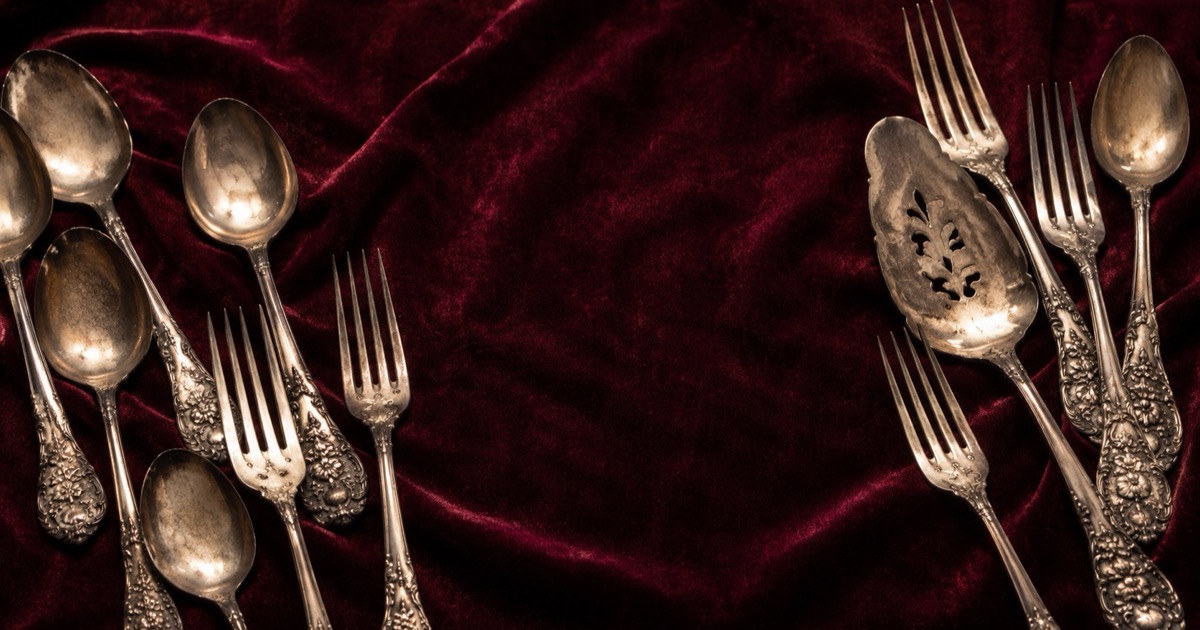
Antique silverware patterns are unusually identifiable compared with most antiques, because American silver makers stamped their names on nearly everything and published their patterns by name. By the end of this guide you will know the right order of operations — backstamp first, pattern second — plus the famous maker and pattern names worth recognizing, and how monograms, completeness, and silver content shape what a set is really worth.
Antique silverware patterns are identified from the handle: turn the piece over and read the backstamp first to learn the maker and whether it is sterling or plate, then match the handle’s outline and ornament against that maker’s documented patterns in a flatware reference or replacement-matching service. Maker plus handle design pins down nearly every American pattern.
Quick identification checklist
- Flip a spoon or fork and read everything stamped on the back: a maker name, Sterling, or plate wording like A1, EPNS, or Triple Plate.
- Remember that 1847 Rogers Bros. is brand wording, not a production year, and it marks silverplate rather than sterling.
- Photograph the handle front and back; pattern matching runs almost entirely on handle shape and ornament.
- Note any monogram, since engraved initials change desirability for resale.
- Count place settings and serving pieces, and look for the original fitted chest.
- Treat sterling weight as a price floor, but research the pattern before selling anything by weight.
Read the backstamp before you chase the pattern
American sterling is almost always stamped Sterling, or sometimes 925/1000, alongside the maker’s name or trademark. Plate announces itself differently: wording like A1, EPNS (electroplated nickel silver), or Triple Plate, plus the big plating brands. Many of the most familiar names in inherited flatware — the many Rogers variations, Community, Holmes & Edwards — are plate lines, not sterling. A few makers also left dating evidence: Gorham marked much of its sterling hollowware with small year symbols, and English flatware carries hallmark date letters that can pin a year precisely. Identify the maker and the metal first, because the same pattern name can exist at more than one company, and every serious pattern reference is organized by maker.
Matching the pattern like the pros do
Professional matching services and reference books identify flatware almost entirely from the handle: the outline (pointed, rounded, fiddle-shaped), the ornament (scrolls, flowers, shells, plain panels), and where the decoration sits. Work the same way. With the maker known, compare your handle against that maker’s documented patterns in a flatware reference or a replacement-matching service’s photo library; between them they cover tens of thousands of named patterns. Check the back of the handle too, since better patterns carry ornament on both sides. Serving pieces help because they show the design at a larger scale. Pattern names are almost never stamped on the piece itself, which is exactly why this visual matching step exists.
Famous antique silverware patterns worth knowing
A handful of patterns anchor the American market, and learning them gives you instant bearings.
- Gorham Chantilly, introduced in 1895, is often called the most popular American sterling pattern ever made; its restrained French scrollwork survives in huge quantity, which keeps prices sane for buyers.
- Reed & Barton Francis I, from the early 1900s, is the opposite personality: densely sculpted fruit and floral clusters, with motifs that vary from piece to piece, and persistent collector demand.
- Towle Old Master, introduced in the 1940s, shows how strong sterling stayed into the mid-century; it is common, handsome, and steadily traded.
- 1847 Rogers Bros., the flagship plate brand of International Silver, produced the patterns most families inherit, including mid-century favorites like First Love and Daffodil — abundant, sentimental, and modestly priced.
Knowing whether your pattern is a Chantilly-tier sterling classic or a beloved plate pattern frames every decision that follows.
Monograms, condition, and complete services
Monograms split the market. For everyday resale, an engraved initial narrows your pool of buyers and usually trims the price. On earlier or finer pieces, period monograms read as part of the object’s history and bother collectors much less. What hurts more than a monogram is removing one: buffing out initials thins the metal and leaves a telltale dished spot that serious buyers check for. Condition matters in quieter ways too — worn fork tines, replaced knife blades, and plate loss at high spots on plated pieces. Completeness carries its own premium: a service for eight or twelve with serving pieces in the original chest outsells the same count assembled from odd lots, though assembled sets remain a sensible way to build a usable service cheaply.
What antique silverware is honestly worth
Sterling flatware has a price floor: the metal itself. Spoons and forks are solid and count at close to their full weight, while hollow-handled knives are mostly cement filler inside a thin silver shell, so they add little metal value. Above that floor, collector demand decides. Heavily worked patterns with active replacement demand — Francis I is the classic example — sell well above melt, while common mid-century sterling often trades only modestly over it. Silverplate has no meaningful metal value, so it trades on usefulness and looks: complete, attractive services and ornate Victorian serving pieces do best, and incomplete plate lots stay thrift-store cheap. Condition, completeness, and pattern demand move value far more than age alone.
Watch-outs and common mistakes
- Reading 1847 on Rogers Bros. pieces as the year of manufacture; it commemorates the brand’s founding, and most sets are decades newer.
- Assuming any Rogers mark means sterling; nearly every Rogers line is plate unless Sterling is stamped.
- Trusting a pattern name alone; different firms reused the same romantic names, so maker plus pattern is the only safe label.
- Selling a full sterling set for scrap without checking pattern demand; sought patterns carry real premiums over melt.
- Polishing aggressively or using dip cleaners before selling; softened detail and stripped patina cost more than tarnish does.
Photo tips that improve identification
- Fill the frame with the back of one handle so the maker stamp and metal marks are readable.
- Shoot the handle front at a slight angle in soft side light to bring out the ornament for matching.
- Lay out one place setting plus any serving pieces in a single overhead shot to show the set’s scope.
- Photograph any monogram and any wear spots honestly; both matter to buyers and appraisers.
Common questions
Is silverware marked 1847 Rogers Bros worth anything?
Usually only modestly. The 1847 refers to the brand’s founding, not the year of manufacture, and Rogers Bros. lines are silverplate rather than sterling, so there is no metal value underneath. Complete, attractive services in good condition and popular mid-century patterns sell best, while incomplete or worn plate lots stay inexpensive.
How can you tell if old silverware is real sterling?
Flip the piece and read the back of the handle. American sterling is almost always stamped Sterling or 925 alongside the maker’s name. Wording like A1, EPNS, Triple Plate, or most Rogers brand names indicates silverplate. If nothing is stamped, treat the piece as plate until a tested mark says otherwise.
Do monograms lower the value of antique silverware?
For everyday resale, yes — an engraved initial narrows the pool of buyers and usually trims the price. On earlier or finer pieces, a period monogram reads as part of the object’s history and bothers collectors much less. Removing a monogram is worse than keeping it, because buffing thins the metal and leaves a dished spot buyers check for.
Related guides
- Silver Plate vs Sterling Silver: How to Tell the Difference
- Sterling Silver Hallmarks: What the Marks Mean
- Silver Makers Marks Identification: How to Read Maker Stamps
When to use the Antique Identifier app
Photograph one full place setting, then tight shots of the backstamp and the handle ornament front and back. The app can narrow the maker, era, and often the pattern family quickly, which turns the reference-book stage from a hunt into a confirmation. If it flags a high-demand pattern or an unusually valuable maker, verify with a matching service or specialist before you price or sell.