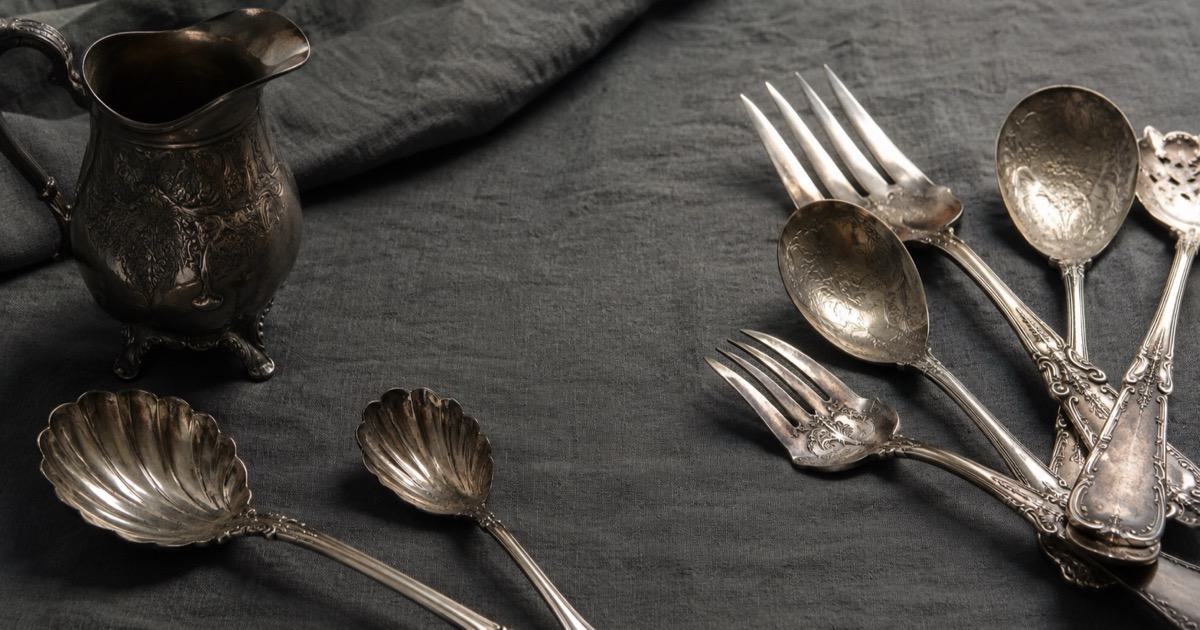
The silver plate vs sterling question is usually settled in the first minute, because makers marked both kinds of metal; you just need to know which words and symbols mean solid silver and which mean a thin silver coating over base metal. The marks were never meant to deceive, but a century later they confuse almost everyone sorting a drawer of inherited flatware.
Sterling is solid silver at 92.5 percent purity, while silver plate is a thin electroplated silver coating over base metal. The fastest tells are the stamps: “Sterling,” “925,” or an English lion passant mean solid silver, while EPNS, EP, A1, or “Triple Plate” mean plating. Start by reading every mark on the piece under good light.
By the end of this guide you will be able to read the marks that decide the question, use wear patterns when marks are missing or worn, understand why the magnet trick is weaker than the internet claims, and frame the value of each honestly before you sell or scrap anything.
Quick identification checklist
- Look for “Sterling,” “925,” or an English lion passant; these indicate solid silver.
- Treat EPNS, EP, A1, “Triple Plate,” “Quadruple Plate,” or “Silver on Copper” as plate marks.
- Check high-contact points such as rims, handle backs, and feet for gray or coppery bleed-through.
- Ignore monograms as evidence; both sterling and plate were engraved for customers.
- Remember the magnet only rules things out, since most plated base metals are non-magnetic too.
- Watch for “Weighted” or “Reinforced” on sterling candlesticks; the silver shell is thin over filler.
Silver plate vs sterling: the marks that settle it
Sterling is solid silver at 92.5 percent purity, and most of it says so. American pieces from the mid-1800s onward are typically stamped “Sterling,” “STERLING,” or “925.” English solid silver carries a hallmark row that includes the lion passant, a small walking lion. Continental pieces often use fineness numbers such as 800, 830, or 900, which mean solid silver at a lower purity than sterling, and early American “COIN” marks indicate solid silver around 90 percent.
Plate announces itself with a different vocabulary. The most common marks and what they tell you:
| Mark | What it means |
|---|---|
| Sterling, 925, lion passant | Solid sterling silver |
| 800, 830, 900 | Solid continental silver, lower fineness than sterling |
| EPNS, EP, EPBM | Electroplated silver over nickel silver or britannia metal |
| A1, AA, Triple Plate, Quadruple Plate | Plating quality grades, always plate |
| Silver on Copper, Sheffield Reproduction | Plated copper wares |
| IS, 1847 Rogers Bros., Community Plate | Major American plate brands |
Two traps deserve special mention. “1847 Rogers Bros.” is silverplate, and the date is part of the brand name, not the year your spoon was made. And IS stands for International Silver, a company that produced oceans of plated flatware; it made sterling lines as well, but those are marked “Sterling” explicitly, so read the whole stamp.
Why the magnet test only filters
A magnet is a useful first pass with strict limits. Silver is not magnetic, so if a magnet snaps firmly onto a piece, the body is steel or iron and it is certainly not solid silver. But most plated wares were built on copper, brass, or nickel silver, none of which attract a magnet either. A piece that ignores the magnet could be sterling or could be ordinary plate.
In other words, the magnet can only say no. It can never say yes. Treat a non-magnetic result as permission to keep checking, not as a conclusion.
Wear tells the truth when marks are gone
Plating is thin, and decades of polishing wear through it exactly where fingers and cloths rub hardest. Examine the high points: the crest of embossed decoration, the back of spoon bowls, handle ridges, rims, spouts, and feet. On worn plate you will see a different color breaking through, warm pink where the base is copper, yellowish where it is brass, or a dull gray on nickel silver. Collectors call the coppery version bleed-through, and it is the single most reliable no-mark indicator of plate.
Sterling wears too, but it wears to more silver. Engraving softens, edges round over, and the surface picks up a fine haze of scratches, yet the color stays consistent silver-white all the way down. A monogram tells you nothing either way; engraving was a standard service on plate and sterling alike, so a fancy script initial is evidence of a gift, not of solid silver.
Weighted sterling and other part-silver pieces
Some genuinely sterling objects contain far less silver than their heft suggests. Candlesticks, compotes, and trophy-style pieces marked “Weighted,” “Reinforced,” or “Sterling Weighted” are a thin sterling skin over a filling of pitch or cement that provides stability. They are honestly marked and perfectly collectible, but the metal content is a fraction of the total weight, which matters enormously if anyone quotes you a scrap price.
You will also meet hybrids: serving knives with sterling handles and stainless blades, dresser sets with sterling backs on plated fittings, and plated bodies with applied sterling decoration. The mark usually tells you which part is which, so check each component rather than assuming the whole piece matches the handle.
What each is actually worth
Honest framing helps here. Most silver plate has modest resale value. The base metal is worth little, refiners do not want it, and the market is saturated with mid-century plated flatware sets. Exceptions exist, including elaborate Victorian figural plate, complete services in clean condition, and certain sought-after patterns, but typical plated pieces sell as attractive usable tableware rather than treasure.
Sterling is different because it has a metal floor: whatever the object, the silver content has a meltdown value tied to the spot price, weighted pieces excepted. Above that floor, maker, pattern, age, and condition can multiply the price many times, so never scrap sterling before checking the maker’s mark. A famous name or desirable pattern can be worth far more intact than melted.
Watch-outs and common mistakes
- “German silver,” “nickel silver,” and “Alpaca” contain no silver at all; they name a base alloy.
- The 1847 in “1847 Rogers Bros.” is a brand date on silverplate, not a production year.
- Pseudo-hallmark rows of tiny symbols on plate mimic English hallmarks; look for the lion passant specifically.
- Weighted sterling feels impressively heavy, but the filler, not silver, supplies the weight.
- A non-magnetic result proves nothing by itself; most plate is non-magnetic too.
Photo tips that improve identification
- Photograph the full mark row in one frame, then each symbol close up under raking side-light.
- Shoot the high-wear points such as spoon-bowl backs, rims, and feet where bleed-through shows.
- Capture the whole piece in even daylight so overall color and construction read true.
- For hallmarked pieces, get the lion passant area sharp enough to identify the animal.
Common questions
Is silver plate worth anything?
Most silver plate has modest resale value because the base metal is worth little and refiners do not buy it. Typical mid-century plated flatware sells as usable tableware rather than treasure. Exceptions include elaborate Victorian figural pieces, complete services in clean condition, and certain sought-after patterns, which can attract collectors on their own merits.
What does EPNS mean on silverware?
EPNS stands for electroplated nickel silver, meaning a thin layer of silver has been electroplated over a nickel-silver base alloy. Despite the name, nickel silver contains no actual silver; it is an alloy of copper, nickel, and zinc. Any piece marked EPNS is silver plate, not solid silver, regardless of how heavy or well made it feels.
How can you tell if silver is plated without any marks?
Examine the high-contact points such as spoon-bowl backs, rims, handle ridges, and feet, where decades of polishing wear through plating first. Plate shows a different color breaking through, pink over copper, yellowish over brass, or dull gray over nickel silver, while sterling stays consistently silver-white no matter how worn. A magnet only helps if it sticks, which rules out solid silver, since most plated base metals are non-magnetic too.
Related guides
- Sterling Silver Hallmarks: What the Marks Mean
- Silver Makers Marks Identification: How to Read Maker Stamps
- How to Photograph Silver Hallmarks
When to use the Antique Identifier app
Photograph the whole piece, then take tight, well-lit close-ups of every mark, including partial or worn stamps. The app can quickly narrow whether a mark row reads as sterling, continental silver, or plate, and often suggests the maker and era, which focuses your follow-up research. If the result points to a valuable maker or an unusually rare pattern, treat that as a reason to verify carefully, not as a final answer.