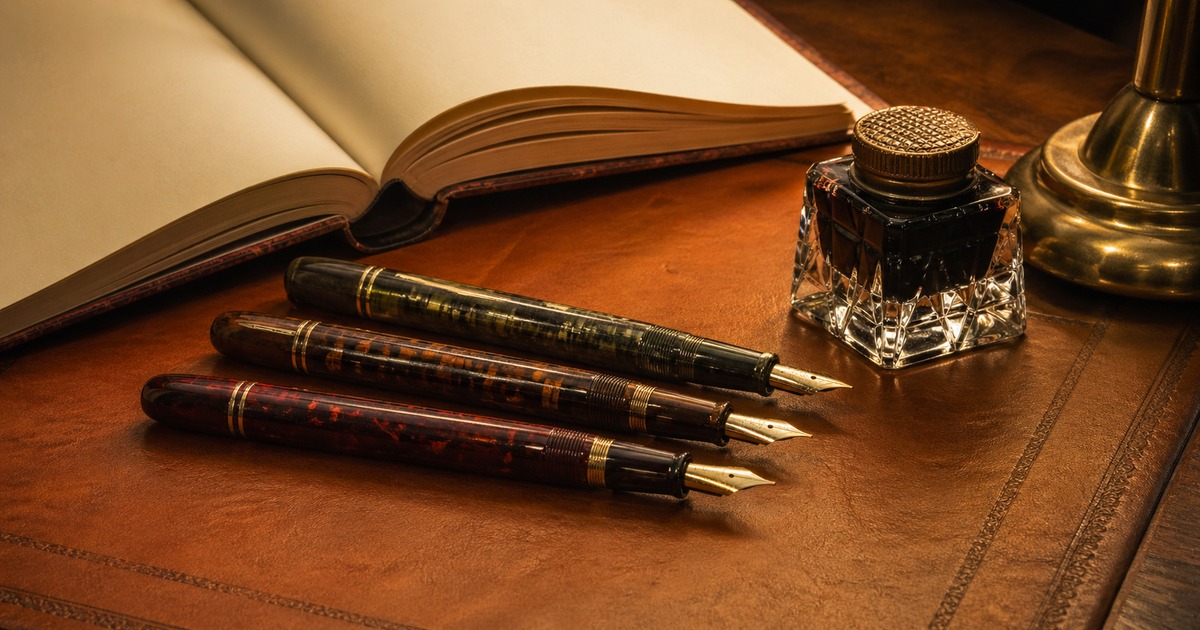
If you are trying to work out how to identify vintage fountain pens, start with the evidence that is hardest to fake: marks, material, construction, and wear. This guide gives you a practical first-pass workflow so you can narrow what you have before you decide whether to keep researching, list it for sale, or ask for a professional appraisal.
The goal is not to promise certainty from one photo. The goal is to help you ask better questions, take better photos, and spot the clues most likely to move the identification forward.
Quick identification checklist
- Check the barrel imprint with brand and date code.
- Check the nib stamping including 14k or 18k gold marks.
- Check the clip and cap band style.
- Check the filling mechanism such as lever, button, or piston.
- Check the color, material, and pattern of the barrel.
What to inspect first
Begin with the parts of the object that carry the most diagnostic value. For this topic, that usually means barrel imprint with brand and date code, nib stamping including 14k or 18k gold marks, and any visible maker’s marks, labels, or numbers. Write down exactly what you see before you start searching. Small wording differences on marks matter.
If the object has damage or repairs, note those too. A replacement lid, repaired foot, or modern screw can change both the dating and the confidence of your identification.
Step-by-step identification process
- Photograph the whole object first so the shape and proportions are clear.
- Capture close-ups of barrel imprint with brand and date code and any distinctive marks or labels.
- Compare the material, finish, or construction details with known examples from trusted references.
- Check whether the wear pattern matches real use and age or looks artificially added.
- Use Antique Identifier as a shortcut to narrow the likely category, era, or maker, then verify against stronger references if the item seems important.
Reading the imprint and the nib
On most vintage fountain pens the brand, model line, and sometimes a date code are stamped into the barrel. Look near the cap end, along the side of the barrel, or just above the section. Common imprints read ‘PARKER VACUMATIC MADE IN U.S.A.’ or ‘WATERMAN’S IDEAL NEW YORK’. The font, layout, and date code dot pattern can all narrow the year. Parker famously used a quarter-by-quarter date code system on Vacumatics from 1939 onward.
The nib confirms the story. Most quality vintage pens have a 14k or 18k gold nib stamped with the maker’s name and the gold karat. The nib also often shows a model size or initial that ties to a specific feed and section combination. Steel nibs on otherwise high-end vintage models are usually replacements, and a steel nib labeled ‘IRIDIUM TIPPED GERMANY’ on a 1940s American pen is a strong sign of a swapped part.
Filling system narrows era. Lever fillers were standard from roughly the 1910s into the 1950s. Button fillers, typical of Parker Duofolds, ran into the 1930s. Vacumatic and aerometric fillers identify specific Parker eras. Piston fillers are most common on European pens, especially Pelikan and Montblanc. When the filling mechanism does not match the imprint or the model name, suspect either a parts pen or a misidentification.
Watch-outs and common mistakes
- calling a steel-nib pen a gold-nib pen without checking.
- missing modern pens marked vintage style.
- ignoring replacement nibs swapped between bodies.
- treating a worn imprint as a guarantee of age.
Photo tips that improve identification
- photograph the full pen, the barrel imprint, and the nib separately.
- capture the cap band and clip in macro.
- shoot the section and feed close up.
Putting it all together
No single clue settles how to identify vintage fountain pens on its own. Marks can be added later, materials can be substituted, and wear can be faked. What gives you a confident identification is a stack of consistent evidence: the mark agrees with the material, the material agrees with the construction, and the construction agrees with the era the mark suggests. When all three line up and the wear looks honest for an object that age, you usually have what you think you have.
When one clue disagrees with the others, slow down rather than forcing a conclusion. A common pattern is a real period body with a later mark added to lift value, or a modern reproduction with a legitimate-looking signature. Documenting the disagreement in your notes is more useful than hand-waving past it. If a piece might be valuable, the cost of a second opinion from a specialist is small compared to the cost of getting it wrong.
Related guides
- Zippo Lighter Date Codes: How to Date Your Lighter
- How to Identify Vintage Wristwatches
- How to Identify Antique Oriental Rugs
- How to Identify Wedgwood Marks and Date
When to use the Antique Identifier app
The app is most useful after you have taken one full photo and a few tight detail shots. It can help narrow the likely type, era, and material, which makes your follow-up research faster. If the result points to something unusually rare, signed, or high value, treat that as a prompt for deeper verification rather than a final answer.