


Noritake China Marks Identification
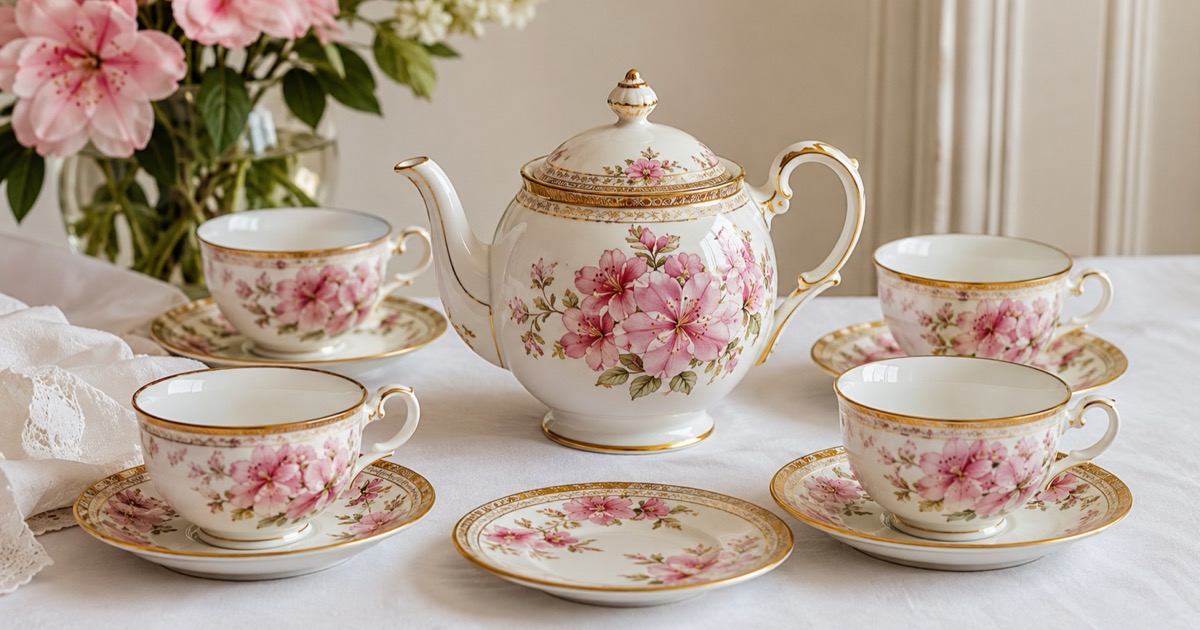
Noritake china marks identification is one of the most systematic exercises in American tableware collecting, because the company kept a long, documented history of backstamp changes tied to periods that every dealer and collector recognizes. Read the backstamp carefully and you can usually narrow a piece to a broad era without any additional research tools.
Noritake china marks are the backstamps on the base of the porcelain, and the two most diagnostic details are the country wording — Nippon, Japan, or Made in Occupied Japan — and the letter inside the wreath device, M or N. Read the country line first; that wording alone places a piece in a broad, documented era.
The company behind the marks has roots in the Morimura Brothers trading firm, which exported porcelain from Japan to the United States starting in the late nineteenth century. That export operation grew into the Noritake company, and its long production history — crossing major historical events and import regulations — left a layered record in its backstamps.
Quick identification checklist
- Read the country-of-origin wording on the backstamp: “Nippon,” “Japan,” “Made in Occupied Japan,” and “Japan” each correspond to different time periods
- Look for the wreath device in the mark — the letter inside it (M or N) is a key era indicator
- Check the backstamp color: green, blue, red, and gold marks each appear in documented periods, though color alone is not a definitive date
- Note whether the mark is printed, stamped, or incised — production method evolved over time
- Look for a pattern number or pattern name on the base alongside or separate from the maker’s mark
- Assess whether the piece is part of a service set or a decorative item — the two categories were often made and marked slightly differently
The Morimura Brothers to Noritake thread — and the wreath mark
The earliest Noritake-related china exported to the United States carried “Nippon” backstamps, as required by US customs regulations at the time. These pieces are sometimes grouped separately as Nippon porcelain, even though many were made by or for the organization that became Noritake. The Nippon-era pieces span roughly the late nineteenth century through around 1921, when regulations changed to require “Japan” rather than “Nippon.”
Within this Nippon-era production, the “M in wreath” mark — a wreath enclosing the letter M for Morimura — is among the most recognized marks in American china collecting. After the regulation change, pieces moved to “Japan” backstamps with evolving Noritake branding. The letter inside the wreath later changed from M to N (for Noritake), a transition generally associated with the early 1950s in collector literature — though the exact changeover varied by product line, and some transitional marks exist. The rule of thumb: M-in-wreath with “Nippon” is the earliest tier; M-in-wreath with “Japan” is interwar or early postwar; N-in-wreath is mid-century and later.
Country-line dating: the most reliable eras
The country-of-origin wording on Noritake backstamps provides the clearest dating framework available:
| Country wording | Approximate era |
|---|---|
| Nippon | Before approximately 1921 |
| Made in Japan / Japan | 1921 onward (broad) |
| Made in Occupied Japan / Occupied Japan | Approximately 1945–1952 |
| Japan (post-occupation) | 1952 onward |
“Occupied Japan” pieces were produced during the American occupation of Japan following World War II and are required to carry that designation on exports. This creates a narrow, identifiable window that collectors specifically seek. Genuine Occupied Japan marks are not rare on Noritake — a large amount of china was exported in this period — but the wording must appear on the base, not just on a paper label.
Famous patterns as practical examples
Two Noritake patterns appear so frequently in collector discussions that they serve as useful reference points.
Azalea is a pink-floral pattern on white ground with a gold border, produced over a long period and sold by Larkin Company as a premium item. It is among the most collected Noritake patterns in the United States. Pieces carry a distinctive backstamp version associated with the Larkin Company relationship. Complete sets in Azalea are common enough that individual serving pieces sell at modest prices; complete services in excellent condition are more sought after.
Tree in the Meadow features a naturalistic landscape scene in earth tones and was a popular export pattern. It appears on a wide range of forms. Like Azalea, individual pieces are plentiful; unusual forms and excellent condition drive higher interest.
Neither pattern is inherently rare, and knowing the pattern name helps with research but does not by itself indicate high value.
Backstamp color, wording variants, and pattern numbers
Backstamp ink color provides supporting context: green marks are broadly associated with earlier production; red and gold marks appear later. Treat color as a secondary cue, not a standalone date — usage was not perfectly consistent across product lines.
The exact wording matters beyond the country designation. “Hand Painted” or “Hand Painted Nippon” indicates hand decoration rather than transfer printing. “RC Noritake” marks indicate a different product line. Wording that includes “Noritake China” explicitly is generally mid-century or later.
Many pieces also carry a separate pattern number — typically a four- or five-digit code on the base — alongside the maker’s mark. These numbers correspond to documented pattern records and are the most precise identification tool for pieces without a common collector name. Pattern names like Azalea and Tree in the Meadow are marketing names attached to specific pattern numbers; pieces with numbers but no common name are equally identifiable with the right references.
Honest value framing
Most mid-century Noritake service pieces — dinner plates, cups and saucers, salad plates — are modestly priced in the current market. Supply is high, condition issues are common, and demand for complete china services has softened. Buying individual pieces to use is affordable; building a complete matching service is possible but takes patience.
The exceptions are genuine Nippon-era pieces in excellent condition, pieces from scarce patterns, unusual serving forms in popular patterns like Azalea, and complete sets in near-mint condition. Occupied Japan pieces carry a small premium over plain postwar Japan marks among collectors who seek that specific window.
Watch-outs and common mistakes
- A paper “Nippon” or “Noritake” label does not substitute for a fired backstamp — labels can be placed on any piece
- Crazing (fine surface cracks in the glaze) is normal aging but does reduce value; distinguish it from actual chips or fractures
- “Occupied Japan” must appear on the base mark, not just on box or label, to be genuinely from that production period
- Pattern number research requires reliable published references — online listings frequently contain misattributions
- Gold trim wear is extremely common and difficult to repair; factor it into condition assessment before purchasing
Photo tips that improve identification
- Photograph the base flat-on with good even lighting to capture the full backstamp text and any pattern number
- If the mark is in a pale color (light green or gold), try a slightly raking light or adjust contrast to make the wording legible in the photo
- Photograph both the pattern (top of the piece) and the base together so they can be compared in a single research session
- For sets, photograph one complete place setting plus base marks from a representative sample of pieces — marks sometimes vary across items in a service
Common questions
What does the M in the Noritake wreath mark mean?
The M stands for Morimura, the trading family behind the company’s early export business. M-in-wreath marks belong to the earlier tiers of production: paired with “Nippon” wording they are the earliest, and paired with “Japan” they are interwar or early postwar. The letter later changed to N for Noritake, a transition generally associated with the early 1950s in collector literature.
Is Noritake china from Occupied Japan valuable?
“Made in Occupied Japan” marks date a piece to the narrow window of the American occupation, roughly 1945 to 1952, and collectors who focus on that period pay a small premium over plain postwar “Japan” marks. The wording must be fired into the base mark, not just printed on a label or box. Most Occupied Japan Noritake is still modestly priced, since exports in that period were substantial.
How do I find my Noritake pattern name from the number?
The four- or five-digit number on the base is a pattern code that corresponds to documented pattern records, and published Noritake collector references and pattern-matching services index those numbers. Photograph the full backstamp and the pattern itself, then compare against reliable references rather than online listings, which frequently contain misattributions. Many patterns have only a number and no marketing name, and they are equally identifiable.
Related guides
- Nippon Porcelain Marks Identification
- China Makers Marks Identification: How to Read Old China Marks
- Fine China Patterns Identification
When to use the Antique Identifier app
Photograph the top of the piece showing the pattern clearly, then a straight-on base shot with the full backstamp visible. The app can match the backstamp style and country wording to the documented era and identify many named patterns quickly. For pieces where the pattern number suggests a potentially scarce attribution, or for large sets where a precise era matters for value, use the app result as a starting point and cross-reference against published Noritake collector references.
Topics