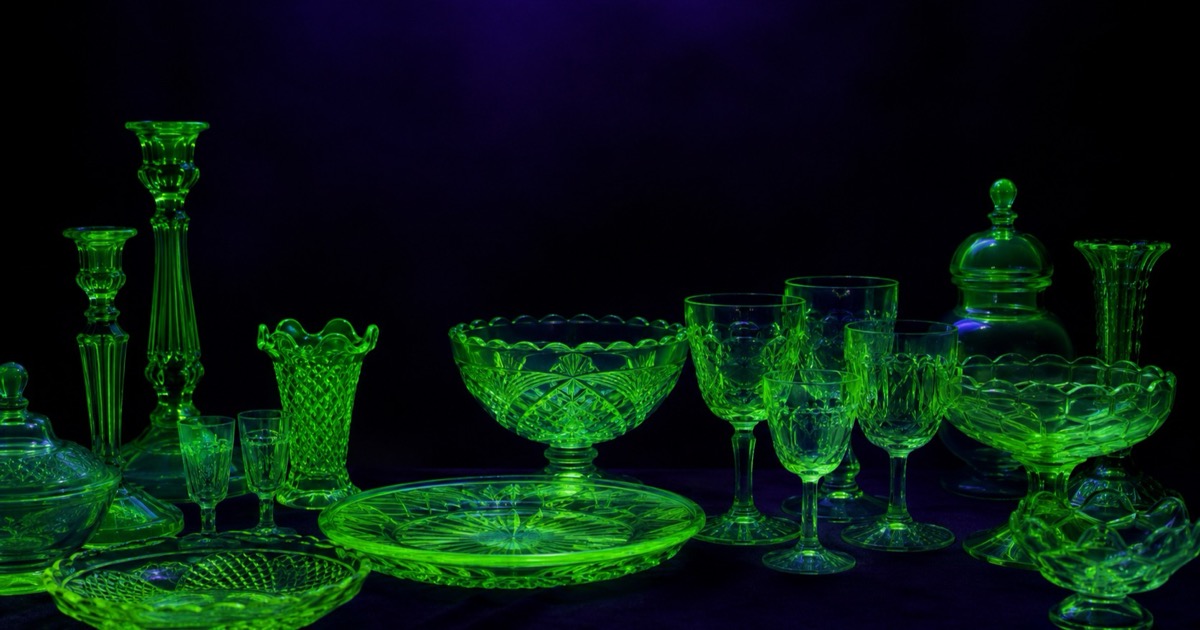
Uranium glass identification is one of the few jobs in the antiques world with a near-instant test: under the right ultraviolet light, glass colored with uranium fluoresces an unmistakable, vivid green. The catch is that the test only answers one question, and collectors routinely misread what it does and does not prove. By the end of this guide you will know how to run the blacklight test correctly, how to separate uranium glass from look-alike green glass, and why a strong glow tells you about chemistry rather than age.
Uranium glass is glass colored with uranium compounds, and the diagnostic test is simple: under a 365nm UV flashlight in a dark room, the body of the glass fluoresces a vivid, electric green. In daylight, look for a yellow-green tint concentrated in thick areas. Start by testing with a true 365nm light, not a cheap 395nm one.
You will also be able to use daylight clues, common forms, and a little terminology discipline to sort the genuinely interesting pieces from the shelf of green glass at the next estate sale.
Quick identification checklist
- Test with a 365nm UV flashlight in a dark room; uranium glass lights up a vivid, saturated green.
- Distrust cheap 395nm lights on their own; their visible violet glare makes ordinary glass look vaguely green.
- In daylight, look for a yellow-green tint that concentrates in thick areas like feet, stems, and handles.
- Use the vocabulary correctly: collectors reserve “vaseline” for transparent yellow-green uranium glass.
- Read the glow’s character: faint, soft, or wispy usually means manganese glass, not uranium.
- Remember that brand-new uranium glass glows exactly like antique uranium glass.
Uranium glass identification under UV light
The test itself is simple. Take the piece into a dark room, hold a UV flashlight a few inches away, and look for fluorescence coming from inside the glass. Uranium glass does not merely reflect the beam; the body of the glass appears to switch on, glowing an intense green that is obvious from across the room. Thick sections glow hardest, and the effect follows the glass even when you move the light around.
Wavelength matters more than most beginners expect. A 365nm light, true longwave UV, produces clean fluorescence with little visible glare, so what you see is the glass itself responding. The cheap 395nm lights sold as pet-stain finders emit a strong violet that bounces off any shiny surface, making clear and pale glass look misleadingly greenish or purple. Uranium glass will still glow under 395nm, usually strongly, but borderline and faint reactions can only be judged honestly at 365nm. If you test regularly, the better flashlight pays for itself quickly.
Vaseline, uranium, and depression green
The terms overlap and confuse buyers, so it pays to be precise. Uranium glass is any glass colored or tinted with uranium compounds, a practice that became widespread in the nineteenth century. Vaseline glass is the collector term for the transparent yellow-green variety, named for its resemblance to petroleum jelly. Opaque uranium-bearing types exist too, including custard glass and Burmese glass, which glow under UV even though they look nothing like vaseline glass in daylight.
Depression-era green is where most mistakes happen. Some 1920s and 1930s green patterns were colored with uranium and glow brilliantly; others used different colorants and barely react. The same maker could produce both, sometimes within similar-looking lines, so there is no shortcut by brand or pattern name alone. The honest rule: green color predicts nothing, and only the light tells you whether uranium is present.
Manganese glass glows differently
Plenty of old clear and colored glass contains manganese, used as a decolorizer roughly through the World War One era, and it fluoresces too. The difference is character and intensity. Manganese glass shows a faint, soft glow, often described as a gentle yellow-green haze, and you usually need a dark room and a decent light to see it at all. Uranium glass, by contrast, produces a vivid green that looks almost electric.
This distinction is useful in both directions. A weak glow is still information: it suggests older glass chemistry and can support an early date for a clear piece. But sellers sometimes photograph manganese glass under strong UV and list it as uranium glass, so when a listing’s glow looks dim or yellowish rather than vivid green, price it as ordinary old glass.
Daylight clues and common forms
Before the flashlight ever comes out, vaseline glass often announces itself. Look for a yellow-green color with a slightly oily quality, strongest where the glass is thickest: the foot of a compote, the stem of a goblet, the handle of a basket. Held against white paper in daylight, true vaseline glass reads distinctly yellow-green rather than emerald, bottle green, or olive.
Uranium glass turns up in a recognizable set of forms. Pressed pattern glass from the late nineteenth century, candlesticks, salt cellars, toothpick holders, cake stands, compotes, stemware, vanity jars, and small dishes are all common. Many pieces are unmarked, which is normal for their era, so identification leans on pattern, form, and the glass itself rather than a backstamp.
Safety, and why glow does not mean old
The radioactivity question has a calm answer. Uranium glass contains a small amount of uranium bound in the glass itself, and the radiation from a displayed piece is low. Keeping a collection on a shelf is widely considered a negligible risk, and standard collector practice is simple common sense: display freely, handle normally, and skip daily food and drink use as an easy precaution rather than a necessity.
The warning that actually protects your wallet is different. Fluorescence proves uranium content, not age. Glassmakers never stopped using uranium entirely, and modern studios and pressed-glass producers still make glowing pieces today, including reproductions of antique forms. A blazing green glow on a piece with crisp mold seams, no base wear, and a suspiciously perfect surface is consistent with new glass. Age must be established the usual way: wear in the right places, manufacturing traits of the era, and pattern identification.
Watch-outs and common mistakes
- Calling any glowing glass “vaseline”; opaque custard and Burmese types are uranium glass but not vaseline.
- Testing with a 395nm light and mistaking violet reflections for fluorescence.
- Assuming all green depression glass contains uranium; within one maker, some lines glow and some do not.
- Paying antique prices for modern uranium glass because the glow looked convincing.
- Dismissing a faint manganese glow as a failed test; it is a different, still useful clue.
Photo tips that improve identification
- Take one daylight photo against a plain white background so the true yellow-green tint reads accurately.
- Shoot the UV photo in a fully dark room with the light held off-camera so the glow, not the beam, dominates.
- Capture the base and any pontil or mold seams; manufacturing evidence is what separates old from new.
- Include a thick-section close-up, such as the foot or stem, where both tint and glow concentrate.
Common questions
Does all green depression glass glow under UV light?
No. Some 1920s and 1930s green patterns were colored with uranium and glow brilliantly, while others used different colorants and barely react. The same maker could produce both, sometimes in similar-looking lines, so neither the brand nor the shade of green predicts anything. Only the UV test tells you whether uranium is present.
Is uranium glass safe to keep in your house?
Yes, by standard collector practice. The uranium is bound in the glass itself and the radiation from a displayed piece is low, so keeping a collection on a shelf is widely considered a negligible risk. Handle pieces normally, and skip daily food and drink use as an easy precaution rather than a necessity.
Does a green glow mean the glass is antique?
No. Fluorescence proves uranium content, not age, and modern studios and pressed-glass producers still make glowing pieces today, including reproductions of antique forms. Age has to be established the usual way: wear in the right places, manufacturing traits of the era, and pattern identification. A blazing glow on a piece with crisp seams and no base wear is consistent with new glass.
Related guides
When to use the Antique Identifier app
Photograph the whole piece in daylight, then add tight shots of the base, rim, and any pattern details, plus your UV photo if you have one. The app can narrow the likely form, era, and pattern family quickly, which tells you whether the glowing compote in front of you is a common pressed piece or something worth real research. If it suggests a rare pattern or maker, treat that as a prompt for deeper verification rather than a final answer.