


Vintage Toys Worth Money: What to Look For Before You Sell
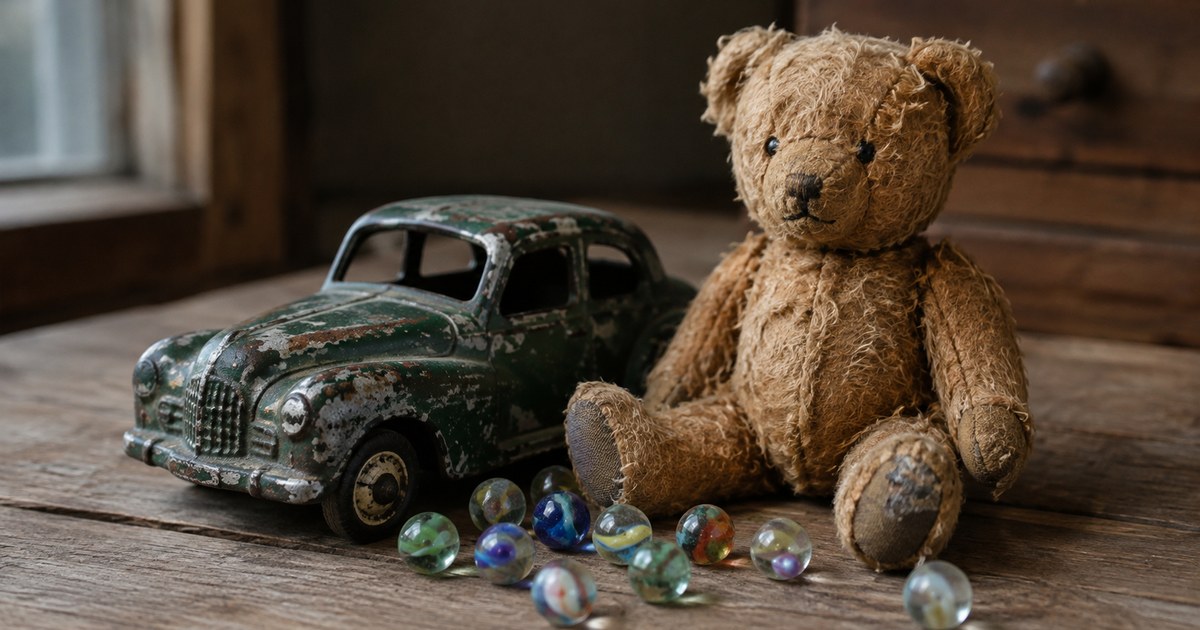
The list of vintage toys worth money is shorter than the internet suggests, and it is decided by different things than most sellers expect. Rarity matters less than people assume. Age matters less than people assume. What actually moves a toy from a dollar bin to a serious listing is a combination of condition, whether the original packaging survived, and whether the piece is a period original rather than one of the reissues, reproductions, and licensed revivals that flooded the same shapes back into the market decades later.
Vintage toys worth money are almost always defined by three factors together: condition (paint, completeness, working mechanisms), original packaging (a boxed example typically outperforms the same toy loose by a wide margin), and verified period manufacture confirmed through maker marks, materials, and construction details rather than appearance alone.
Quick identification checklist
- Assess condition honestly before anything else. Original paint, no repaint, no replaced parts, working mechanism, complete accessories. Every deviation costs.
- Find the box. Then check whether the box is the original one for that exact variant and whether the inserts, instructions, and paperwork are still inside.
- Locate the maker mark. Under the base, inside a limb joint, on a tag, on a foot, stamped into the metal, or on a label seam. Where you look depends on the material.
- Identify the material precisely. Cast iron, tin litho, celluloid, hard plastic, bisque, mohair, composition, and vinyl each place a toy in a different era band.
- Check for reissue tells. Modern screws, plastic where metal belongs, crisp modern typography on a supposedly period label, and an artificially even finish are all warnings.
- Look for named-maker signatures. Certain makers built in physical identifiers that copies rarely reproduce correctly.
- Compare against completed sales, not asking prices. What someone wants for a toy is not what it sells for.
Condition and packaging: what makes vintage toys worth money
Toy collecting grades condition more harshly than almost any other collecting field, for a simple reason: toys were made to be destroyed by children, so survivors in genuinely untouched condition are scarce out of proportion to how many were produced.
The trade language runs roughly from mint in sealed box, through mint in box, to excellent, very good, good, and played-with or poor. The gap between the top of that scale and the middle is not gradual. A mint boxed example can command a multiple of what the same toy fetches loose and worn, and for mass-produced items from the postwar decades the box can be a substantial share of the total value on its own. That is why serious buyers ask for photographs of the box flaps, the end panels, and the interior inserts before they bid.
Two practical consequences follow. First, do not clean, repaint, oil, or “restore” anything before you find out what it is. Original surface, including honest wear, is worth more than a tidy refurbishment in nearly every case. Second, if you have the box, keep it with the toy and photograph it as carefully as the toy itself. Sellers routinely throw away the most valuable part of the lot.
Cast iron: weight, seams, and casting quality
Cast iron toys are one of the most heavily reproduced categories in the hobby, and the copies are old enough now to have acquired convincing wear. The good news is that reproductions leave physical evidence.
Start with weight and wall thickness. Period cast iron toys were made from good iron with substantial walls, and they feel heavy and solid for their size. Many reproductions were cast from thinner or lower-grade metal and feel light or hollow by comparison. Next, look at the seams where the two halves of a casting meet. Original castings tend to fit closely with clean, tight joins, while copies often show a wide, rough, or misaligned seam, sometimes with visible grinding where someone tried to clean it up.
Then look at surface detail. Reproductions are frequently cast from an original toy rather than from original patterns, and each generation of copying loses definition. Lettering fills in, rivet heads soften, and fine relief on a horse’s mane or a wagon’s bodywork goes mushy. Finally, examine the fasteners. Original assembly hardware has a period character to it, and modern Phillips-head screws or bright zinc-plated hardware in an assembly that should be riveted is a straightforward disqualification.
For a fuller treatment of the marks and makers in this category, the dedicated cast iron toy guide below goes deeper than there is room for here.
Plush and dolls: built-in maker identifiers
Some makers deliberately marked their products in ways that persist even after the paper tags are long gone, and those marks are the fastest route to a real identification.
The best-known example in plush is the metal button fixed into the ear of Steiff bears and animals, a manufacturer identifier used across a very long production history. The button’s style, the fabric tag attached with it, and the wording on both changed over time, which turns the ear into a rough dating tool as well as a maker mark. Beyond the button, the material tells you a lot: early mohair plush, jointed limbs, glass or shoe-button eyes, and excelsior or kapok stuffing all point to earlier production than synthetic plush with plastic safety eyes and polyester fill.
Dolls work the same way. Bisque-head dolls typically carry incised marks on the back of the head or the shoulder plate, giving a maker, a mold number, and sometimes a country of origin, and the head material itself is a period anchor. Bisque, composition, hard plastic, and vinyl each belong to different manufacturing eras, and telling them apart by weight, surface, and sound is a learnable skill.
Material as a dating shortcut across categories
If you remember one framework from this article, make it this: material comes before maker.
Celluloid, an early plastic, is light, thin, warm to the touch, and easily crushed. It belongs to a distinctly earlier window than hard plastic, which is heavier, more rigid, and prone to a different kind of aging. Hard plastic in turn precedes the softer vinyls that dominate later production. Tin lithographed toys, with the design printed onto the metal rather than painted on, cluster in their own era band and are separately collectible. Glass marbles run their own timeline, where handmade examples with pontil evidence sit well apart from later machine-made production.
Sorting a toy by material first cuts the search space dramatically before you have found a single mark, and it is the step that stops people from spending an hour looking for a maker stamp on something that was made decades after the maker they had in mind stopped trading.
Watch-outs and common mistakes
- Restoring before valuing. Repainting a cast iron toy or replacing a doll’s wig can wipe out most of what a collector was willing to pay.
- Confusing reissues with originals. Many manufacturers have reissued their own classic designs, sometimes accurately, sometimes with a small mark change. A reissue is not a fake, but it is not the original either.
- Grading your own toy generously. Buyers grade strictly. Describing a played-with toy as excellent costs you credibility and returns.
- Selling a set piecemeal. Complete sets with all accessories generally outperform the sum of their parts, so check what should be present before splitting anything.
- Anchoring on one high listing. Search completed and sold results, discard the outliers, and look at the cluster in the middle.
Photo tips
- Shoot in soft, even daylight against a plain background, with the toy filling most of the frame and no harsh shadows across the paintwork.
- Photograph every maker mark close up: base stamps, ear buttons, head incisions, foot marks, and any surviving fabric or paper tag.
- Take deliberate condition photographs of the flaws, not just the good side. Chips, paint loss, repairs, and missing parts should all be visible.
- Photograph the box on all faces including the end flaps, plus the inserts and any paperwork, laid out flat.
- Add a scale reference in one frame and record the actual weight, since heft is a real identification clue that photographs cannot convey.
Common questions
What makes a vintage toy valuable rather than just old?
Demand, condition, and completeness, roughly in that order. A common toy in extraordinary condition with its box routinely outperforms a scarce toy that has been played to pieces. Age alone contributes very little. The strongest combination is a recognized maker, a design collectors actively chase, original unrestored surface, all accessories present, and period packaging.
Should I clean a vintage toy before selling it?
Light surface dust removal with a dry soft brush is usually safe. Anything beyond that is risky. Do not wash tin lithography, do not polish cast iron, do not wet mohair plush, and never repaint. Collectors pay for original surface, and cleaning that removes patina, decals, or paint permanently reduces what a piece will fetch.
How do I tell a reissue from an original toy?
Compare construction rather than appearance. Check fastener types, casting sharpness, seam quality, material weight, paint application method, and typography on any printed element. Reissues typically show modern manufacturing habits somewhere, even when the silhouette is faithful. Documented reference photographs of a confirmed original are the most reliable comparison you can make.
Related guides
- Antique Cast Iron Toy Identification
- How to Identify Antique Bisque Dolls
- Steiff Teddy Bear Identification
- Vintage Marbles Identification
When to use the Antique Identifier app
Sorting a box of old toys is exactly the situation a photo-based first pass is built for. Instead of researching thirty items one at a time, shoot each piece plus its marks and let the app suggest the material, the likely era, and a probable maker for each. That triage tells you which three items deserve an hour of research and which twenty are common. Treat the suggestion as a starting point, then confirm the promising ones against maker references and completed sales before you list anything.
Topics