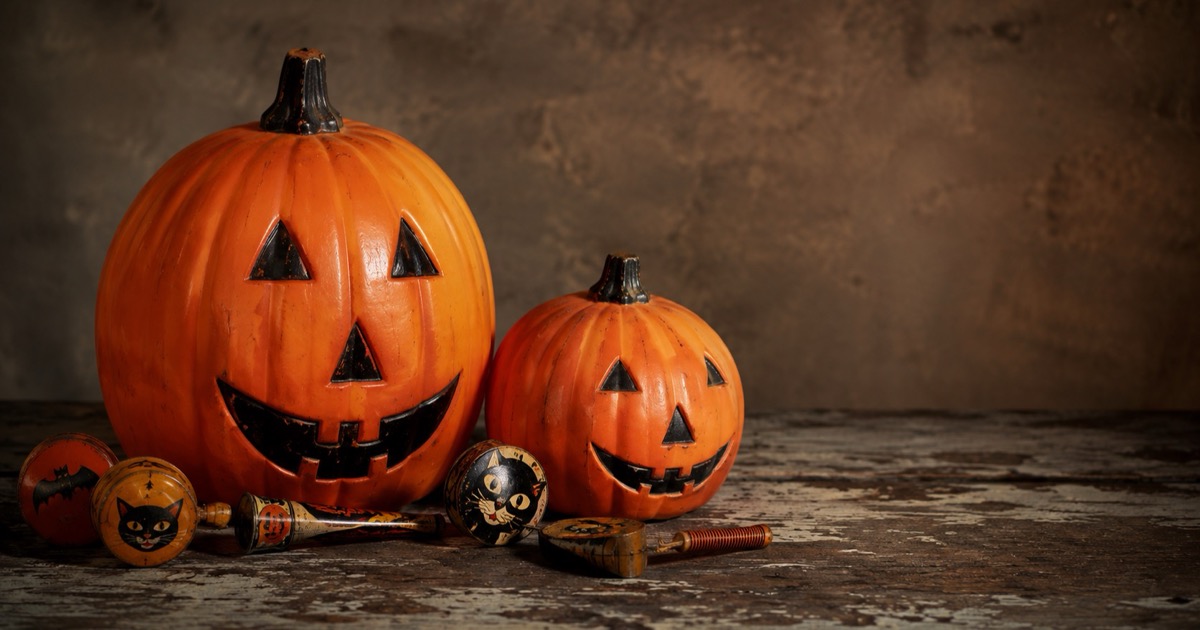
Vintage Halloween collectibles sit near the top of the seasonal antiques market. A papier-mache jack-o’-lantern that sold for pennies in the 1920s can now outsell a cabinet of fine china, and that money has pulled a flood of reproductions and fantasy pieces into the category.
Vintage Halloween collectibles fall into a few core types: German papier-mache and composition candy containers, American die-cut paper by makers like Beistle, lithographed tin noisemakers, 1950s hard plastic, and early postcards. The two most diagnostic tells are honest wear concentrated at edges and high points, and maker imprints or litho text. Start by photographing those details before pricing anything.
This guide walks through the eras that matter — German composition, American paper, postwar plastic, tin noisemakers, and postcards — so you can place a find in the right decade, judge whether the age is honest, and know when a piece deserves serious research.
Quick identification checklist
- Candy containers should come apart: German-era figures separate at the neck or have a plug in the base, because they actually held candy.
- Look inside papier-mache lanterns for the original paper face insert; missing or replaced inserts change value sharply.
- Flip paper die-cuts and check for maker imprints and country-of-origin wording, then judge whether the toning looks like honest age.
- Read the tiny lithographed text on tin noisemakers for names like US Metal Toy, Kirchhof, or T. Cohn.
- Treat 1950s hard plastic as its own category: glossy orange-and-black figures, usually unmarked, dated by style rather than stamps.
- Be suspicious of any “old” Halloween paper or composition with even, all-over tan toning and zero edge wear.
The German era: the top tier of vintage Halloween collectibles
Before World War II, much of America’s Halloween trade was supplied by German cottage industry. The flagship pieces are candy containers in composition or papier-mache: jack-o’-lantern heads, witches, black cats, and devils, plus the famous “veggie people” — figures with molded pumpkin, gourd, or turnip heads on spindly bodies, often dressed in crepe paper. Because these were containers, they separate somewhere: the head lifts off, or a cardboard plug closes the base.
Real German composition has a dry, slightly powdery feel, fine age craquelure in the paint, and wear concentrated on high points and edges. Lanterns usually kept printed paper inserts behind cut-out eyes and mouths, and an intact original insert is a major plus. This is the most valuable corner of the category and, for exactly that reason, the most reproduced.
American paper: Beistle die-cuts and Dennison crepe
Two American names anchor the paper side. Beistle, a Pennsylvania company, produced die-cut cardboard skeletons, owls, witches, and black cats along with honeycomb tissue pieces such as lanterns and table centerpieces. Dennison, of Massachusetts, dominated crepe paper, printed borders, napkins, and gummed “sealers,” and its Bogie Book party-planning booklets are collectibles in their own right.
Dating American paper is a matter of imprints and style. Maker names, country wording, and artwork changed over the decades, and collector references map those changes in detail. As a rule of thumb, heavily embossed die-cuts with muted period color tend to be earlier, while flat, brightly printed cardboard runs later. Condition drives value: folds, tears, tape, and crushed honeycomb all matter.
Postwar plastic and Gurley candles
After the war the look changes completely. The late 1940s and 1950s brought hard plastic novelties of the type collectors call Rosbro-style: glossy pumpkin men, witches with brooms, black cats pulling carts, and small candy-holding vehicles, almost always in saturated orange and black. Most are unmarked, so identification rests on form, color, and the crisp, rigid feel of early hard plastic rather than on stamps.
The same era filled dime stores with Gurley figural candles — small molded wax witches, ghosts, owls, and pumpkins, often with a paper label on the base. They were bought as decorations and rarely burned, so survivors are common; intact labels and unburned wicks separate the better examples.
Tin noisemakers: reading the litho
Tin lithographed noisemakers — ratchets, clickers, shakers, and tambourines — were Halloween party staples from the 1920s into the 1960s. The major American makers, including US Metal Toy Manufacturing, Kirchhof, and T. Cohn, usually printed their names in small type within the artwork, so a loupe will often settle the maker question outright. Kirchhof pieces frequently carry the “Life of the Party” line name.
Artwork and handles help with dating. Earlier noisemakers tend toward detailed scenes and wooden handles, while later pieces favor brighter cartoon graphics and plastic handles. Rust, dents, and split seams are common; clean litho with strong color is what collectors pay for.
Halloween postcards: Winsch and Clapsaddle
The golden age of Halloween postcards runs roughly from 1905 to 1915, and the famous names are worth knowing. Cards published by John Winsch, many featuring striking designs attributed to artist Samuel Schmucker, are among the most sought-after in the hobby. Ellen Clapsaddle was the era’s most prolific artist, and her signed children-and-pumpkins designs remain perennial favorites.
Look for embossing, the publisher line, artist signatures within the image, and postmark dates, which give you a hard latest-possible date. Condition rules here as everywhere: corner wear, album marks, and writing affect price, though a period postmark can add interest rather than subtract it.
Reproductions and fantasy pieces
Vintage Halloween attracts more faking than almost any other collectible niche, and two problems dominate. Reproductions copy real period designs onto artificially aged paper or composition. Fantasy pieces are newly invented designs with no historical counterpart, made to look old and priced as if they were. Plenty of modern Halloween folk art is sold honestly by its makers; the trouble starts at resale.
The tells repeat: tan “aging” that is perfectly even instead of concentrated at edges and exposed surfaces, modern printing dot patterns under a loupe on supposedly early die-cuts, composition that smells of fresh paint, and crackle that looks applied rather than earned. Compare any expensive piece against documented examples before paying German-era money.
Watch-outs and common mistakes
- Paying pre-war prices for fantasy composition figures that never existed in period catalogs.
- Assuming every orange-and-black die-cut is 1930s; classic designs were reissued for decades and licensed reprints are common.
- Overlooking replaced paper inserts in lanterns, which matter a great deal to value.
- Trusting even, all-over toning as proof of age instead of looking for edge and exposure wear.
Photo tips that improve identification
- Shoot the underside and the opening of candy containers so the plug, seam, or neck joint is visible.
- Photograph the backs of die-cuts and paper pieces to capture imprints and true paper tone.
- Take a macro shot of the lithographed maker text on noisemakers.
- Use raking light across composition surfaces so genuine craquelure and wear patterns show clearly.
Common questions
Are unmarked vintage Halloween decorations worth anything?
Yes, many of the most valuable pieces carry no mark at all. German composition candy containers and 1950s hard plastic figures are usually unmarked, so value rests on form, material, paint, and honest wear rather than a stamp. Identify the era first by construction and surface, then compare against documented examples in collector references.
How can you tell a reproduction Halloween die-cut from an original?
Look at the toning and the printing. Genuine old paper shows uneven aging concentrated at edges and exposed surfaces, while reproductions often have perfectly even, all-over tan toning and crisp, untouched edges. Under a loupe, modern reprints show regular printing dot patterns that period die-cuts lack, and licensed reissues of classic Beistle designs are common.
What is the most valuable type of vintage Halloween collectible?
Pre-war German composition and papier-mache candy containers sit at the top of the category, especially figural witches, devils, black cats, and the “veggie people” with molded pumpkin or turnip heads. Condition drives the outcome: intact paper inserts in lanterns, original crepe paper clothing, and unrestored paint separate the serious pieces from ordinary survivors.
Related guides
- Antique Postcard Identification Value
- Antique Cast Iron Toy Identification
- Common Signs of Antique Reproductions and Fake Antiques
When to use the Antique Identifier app
Photograph the whole piece, then take tight detail shots of imprints, litho text, paper inserts, and bases. The app narrows type, era, and likely maker quickly, which tells you whether you are holding dime-store plastic or something from the German trade. If it suggests a rare or high-value piece, treat that as a prompt for deeper verification against documented examples, not as a final answer.